



Kumar Gaurav

A planner raises an emergency PO for a part a sister plant already had in stock. Five structural root causes
Maximo is an EAM. MRO360 is an agentic MRO optimization layer. A deployment-based comparison of where each fits, plus six
Industrial maintenance storeroom with organized spare parts representing MRO cost reduction and inventory optimization.
This article covers what MRO cost actually includes, how to measure it, the mechanics of where real savings come from,
Asset management in manufacturing is a discipline with its own hierarchy, performance mechanics, and failure modes, distinct from the EAM
ABC, VED, FSN, and XYZ all answer different questions. This guide covers how to choose between them, when to combine
Maintenance engineer responding to an unplanned equipment failure in an industrial facility, highlighting the cost of production downtime and asset reliability.
A Verdantis research analysis, anchored to Siemens and Aberdeen benchmarks, mapping where industry’s $1.4 trillion downtime bill goes and how
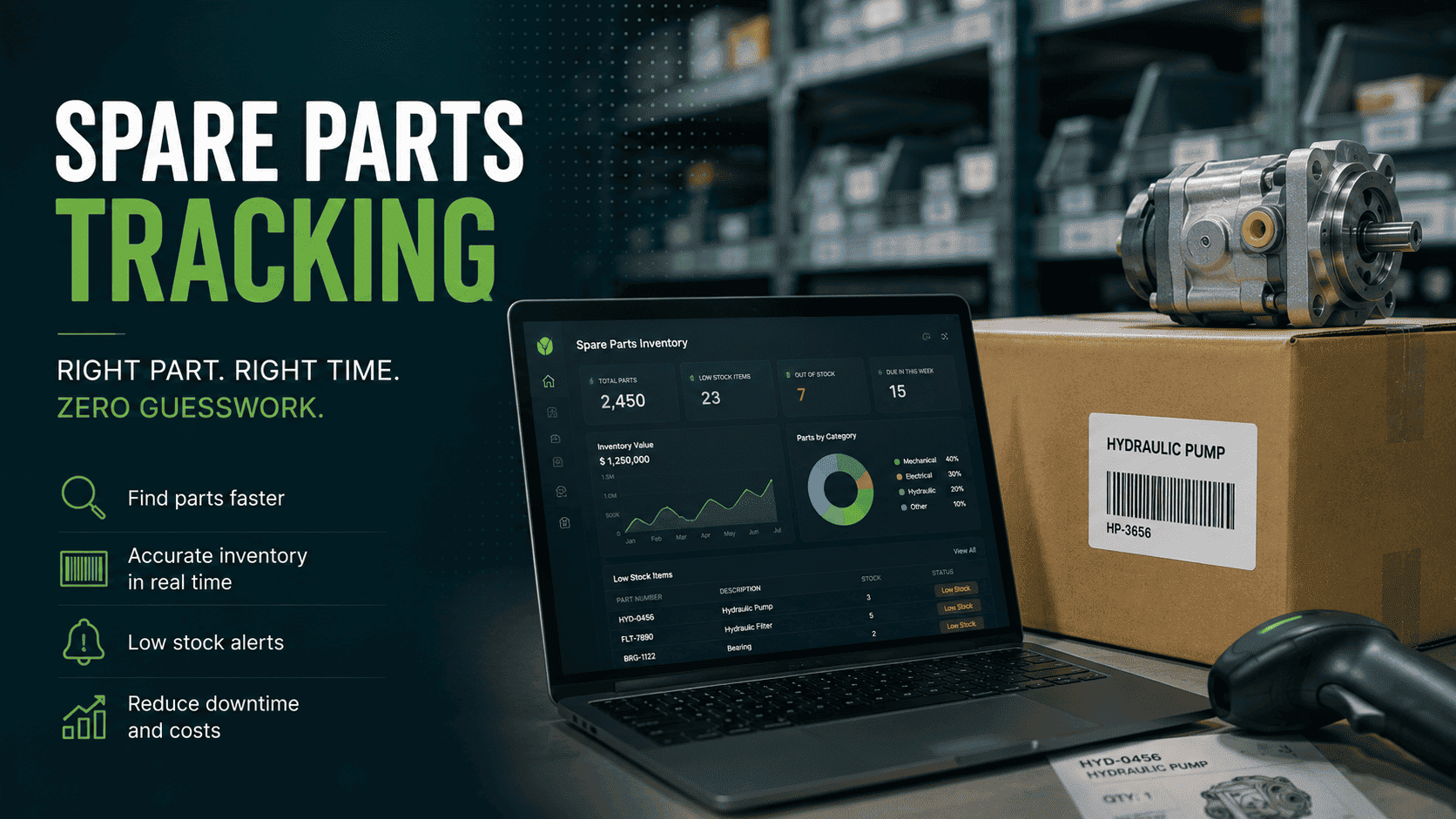
Industrial spare parts tracking dashboard with barcode scanning, labeled components, and real-time inventory monitoring in a warehouse.
A technical guide for maintenance planners on what spare parts tracking actually requires, why most implementations fail, and how to
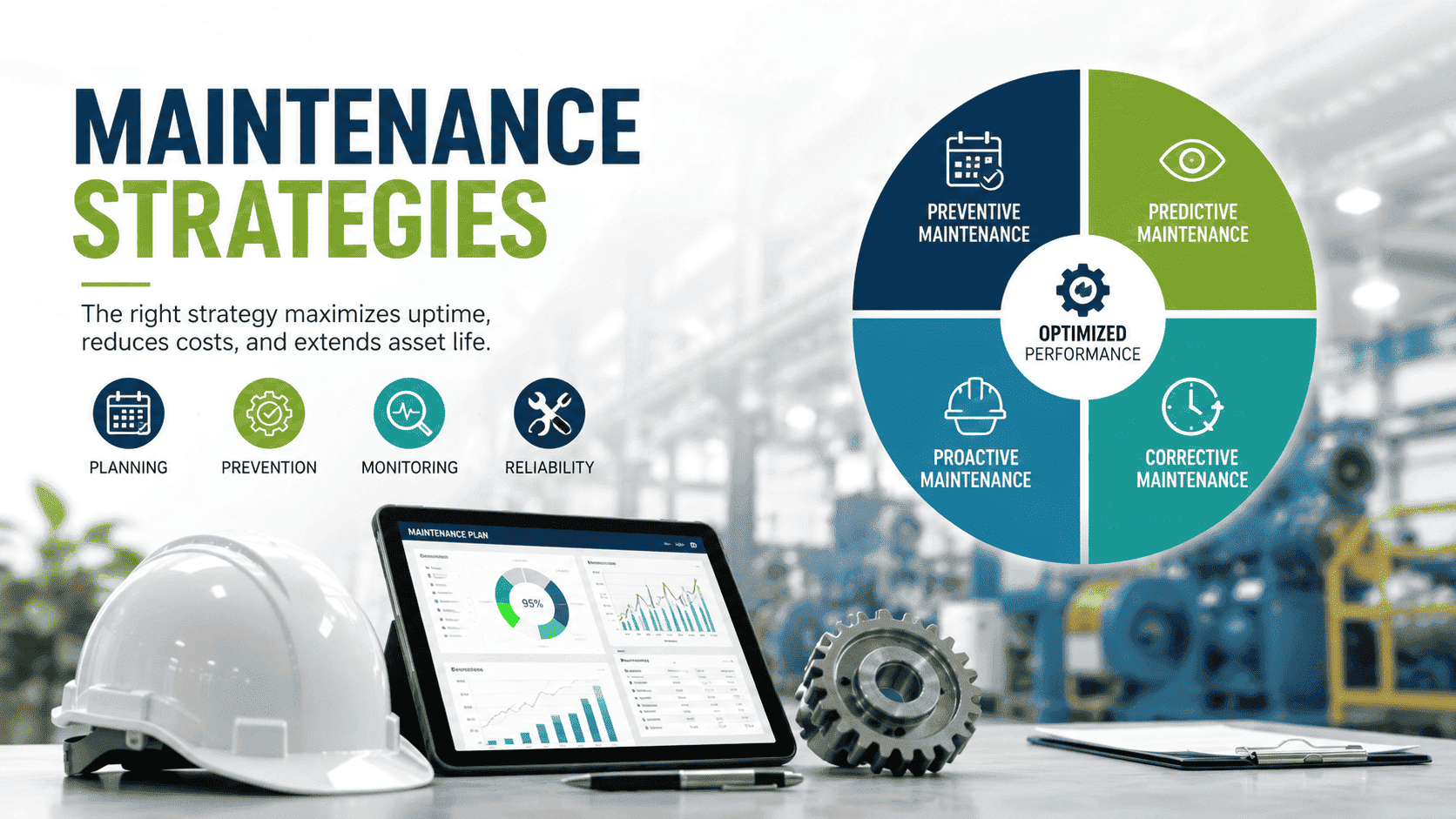
Maintenance strategies framework for improving asset reliability, reducing downtime, and optimizing equipment performance.
Eleven maintenance strategies every asset-intensive operation runs, mapped across three operational maturity levels: Manual, Systematized, and Intelligent.
An offshore platform, digital twin technology, asset health dashboards, predictive maintenance analytics, and reliability monitoring for critical industrial equipment.
Sensors see failures coming. Storerooms cannot answer them. A playbook for the response infrastructure that turns prediction into action in
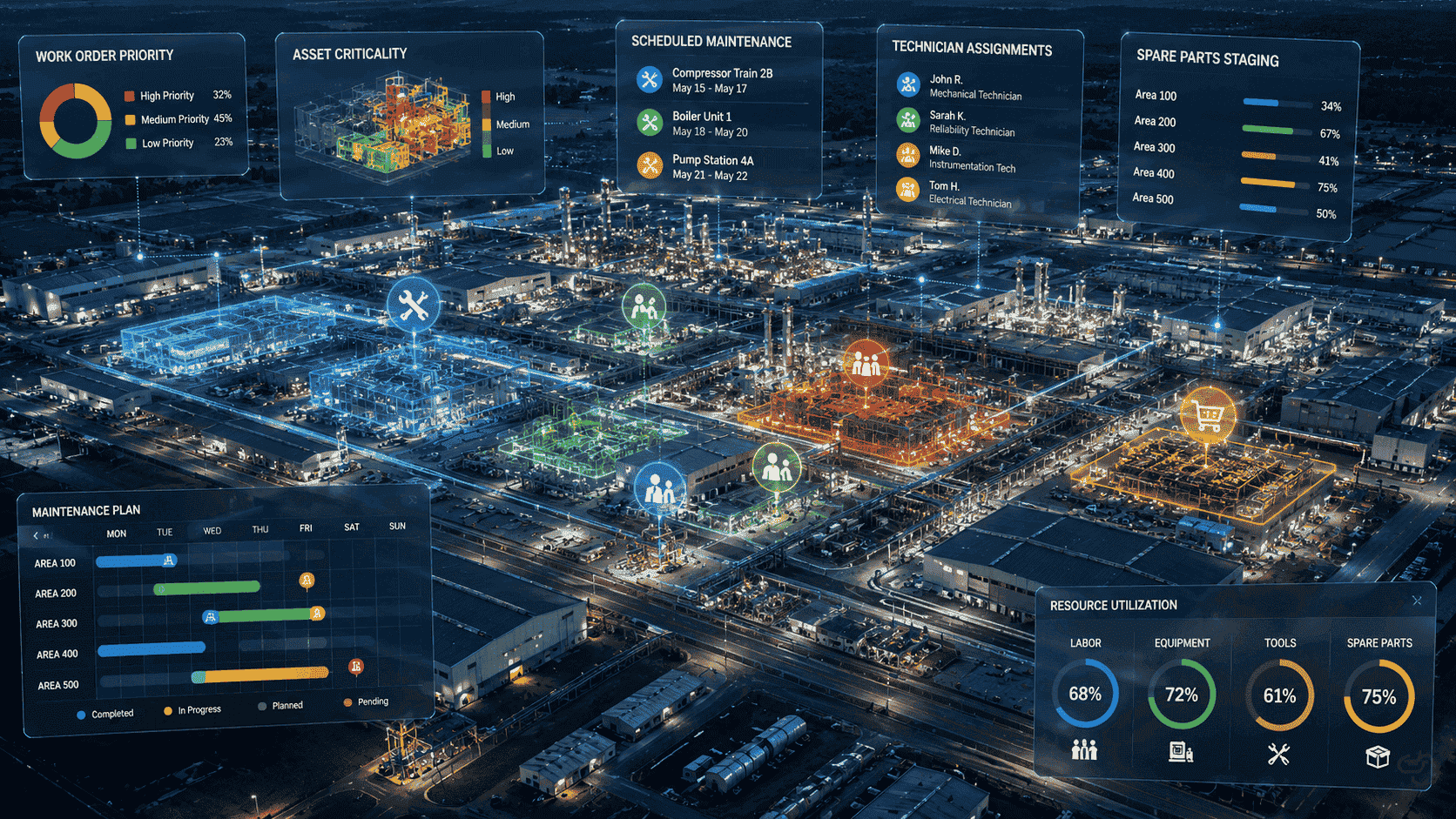
Aerial view of a modern manufacturing facility with digital overlays showing maintenance schedules, technician assignments, spare parts availability, asset criticality heat maps, and work order priorities for advanced maintenance planning.
A practical, AI-native playbook for maintenance planning across MRO inventory, work orders, predictive maintenance, RCM and workforce optimization in heavy

Book A Demo

MRO Master Data Management for a leading $12Bn Oil and Gas company

Oil and Gas organizations face huge unwanted costs in the form of losses, penalties and compensation due to industrial accidents, taking a sizable chunk of their revenues. One of the important reasons for failures and accidents is the breakdown of key industrial infrastructure arising from ineffective management of the material base and inefficiencies in the MRO supply chain that are highly critical for the production and maintenance cycles.

More and more organizations are now looking to establish Master Data Management (MDM) implementations in order to manage their assets through informed decision-making based on reliable data and ensure optimal industrial safety across the enterprise.

About the company:

This US based company is a global leader in providing essential mechanical components for both land and offshore drilling rigs, complete drilling and well servicing rigs, as well as a comprehensive range of tubular inspection, internal coatings, drill string equipment, lifting and handling gear, and downhole drilling tools. It also offers supply chain services through distribution centers strategically located near major drilling and production sites worldwide. With over 800 manufacturing, sales, and service centers globally and annual revenues exceeding $12 billion, the company delivers customer-focused solutions tailored to meet the energy industry’s quality, productivity, and environmental needs.

Material Master Data Challenges

The company faced significant challenges with their master data.
• Lack of consistency and standards for the master data
• Incorrect, incomplete, unclassified and outdated attribute fields of master
data High volumes of data in multiple languages
• Multiple ERP and other legacy instances across the company
• Poorly structured material descriptions
• Lack of data governance and collaboration across cross-functional divisions and locations

Solution & Results Achieved

Solution: Material Master Data Harmonization & Ongoing Maintenance

The company implemented Verdantis Material Harmonize to cleanse and enrich its historical material master data. Using AI-powered tools and the Verdantis Content Repository, the solution classified, standardized, and eliminated duplicate materials.

Once the data was harmonized, Verdantis Material Integrity was deployed for ongoing data governance. It ensured continuous data accuracy through real-time validation, AI-driven classification, and duplication prevention, maintaining high data quality across enterprise systems.

Key Actions Taken:

  • Classified 150,000 materials into 1,210 UNSPSC and 500+ HTS codes
  • Parsed and normalized unstructured material attributes
  • Eliminated duplicates and enriched material descriptions
  • Established real-time data governance and approval workflows
  • Created a centralized repository for cross-functional data access

Results Achieved:

  • Improved Data Accuracy – Eliminated duplicate and inconsistent material records
  • Enhanced Classification – Standardized materials with UNSPSC & HTS codes
    Better Inventory Management – Optimized stock visibility and usage
  • Faster Procurement & Compliance – Enabled seamless material search & regulatory adherence
  • Sustainable Data Governance – Ensured ongoing accuracy with AI-driven maintenance
  • Informed Decision-Making – Centralized data repository for improved operational efficiency

By integrating Material Harmonize & Material Integrity, the company achieved a scalable, AI-powered Master Data Management framework, ensuring long-term data consistency, efficiency, and compliance.

Your data is secure and used solely for intended purposes. We prioritize your privacy and protect your information.