

Jede Beschaffungsentscheidung, jeder Wartungsplan, jeder Lieferantenvertrag und jeder Finanzbericht hängt von konsistenten Daten in den verschiedenen Systemen ab; diese Konsistenz ist jedoch selten gegeben.
Ein und derselbe Lieferant kann unter mehreren Namen auftreten, und ein und dasselbe Ersatzteil kann in verschiedenen Formaten existieren. Laut Gartner Forschungverlieren Unternehmen $12,9 Millionen pro Jahr aufgrund schlechter Datenqualität.
Oracle Master Data Management löst dieses Problem, indem es einen einzigen, konsistenten Datensatz für wichtige Geschäftseinheiten wie Kunden, Materialien, Lieferanten und Anlagen erstellt. Die Daten werden ohne Duplizierung vereinheitlicht, so dass jedes System die gleiche Version der Wahrheit verwendet.
Oracle MDM speichert und verwaltet Daten gut, aber es korrigiert nicht automatisch Daten von schlechter Qualität im großen Maßstab. Wenn das System mit inkonsistenten Daten arbeitet, wird dies durch jeden nachgelagerten Prozess noch verstärkt. Stammdaten sind nicht mehr nur eine Sache des Back-Ends, sondern sie bestimmen direkt, wie gut das Geschäft läuft.
In diesem Artikel erfahren Sie, was Oracle MDM ist, wie es in Unternehmens-Ökosystemen funktioniert und warum saubere, vertrauenswürdige Stammdaten die Grundlage für die Unternehmensleistung sind.
Was ist Oracle Master Data Management?
Oracle Verwaltung von Stammdaten (MDM) ist eine Reihe von Anwendungen und Prozessen zur Erstellung, Verwaltung und Pflege konsistenter Stammdaten in Unternehmenssystemen wie ERP-, SCM-, EAM- und Beschaffungssystemen. Stammdaten sind die Daten, die mit zentralen Geschäftseinheiten wie Kunden, Lieferanten, Artikeln und Vermögenswerten verbunden sind.
Anstatt zuzulassen, dass jedes Unternehmenssystem seine eigene Version eines Lieferanten oder Produkts pflegt, sorgt Oracle MDM dafür, dass alle Systeme auf denselben standardisierten Datensatz verweisen. Dadurch wird Doppelarbeit vermieden, die Konsistenz verbessert und eine zuverlässige Entscheidungsfindung unterstützt.
Da Transaktionen, Berichte und betriebliche Prozesse auf konsistente Eingaben angewiesen sind, fungiert MDM als zentrale Schicht, um die Daten, die zwischen diesen Systemen fließen, abzugleichen. Oracle MDM erstreckt sich in erster Linie auf diese Datendomänen.
- Kundenstammdaten für Verkaufs- und Serviceprozesse
- Lieferantenstammdaten für die Beschaffung und Lieferantenmanagement
- Artikel- oder Produktstammdaten für Bestands- und Lieferkettenvorgänge
- Asset-Stammdaten für Wartung und Lebenszyklusmanagement
Oracle MDM ist eine Kombination von Funktionen, die über mehrere Komponenten bereitgestellt werden, z.B. Oracle Enterprise Data Management (für Governance und Änderungskontrolle) und Oracle Enterprise Data Quality (für Profiling, Standardisierung, Abgleich und Deduplizierung von Datensätzen). Domänenspezifische Stammdatenmodelle sind in Oracle ERP-, SCM- und EAM-Anwendungen eingebettet.
Gemeinsam arbeiten diese Komponenten daran, Stammdaten systemübergreifend zu konsolidieren, zu bereinigen und zu synchronisieren. Damit wird die Grundlage für gemeinsame Daten gelegt, die als einzige Quelle der Wahrheit dienen.
Wann sollten Sie in Oracle MDM investieren?
Die Notwendigkeit von Oracle MDM wird deutlich, wenn Datenprobleme beginnen, den Betrieb und die Entscheidungsfindung zu beeinträchtigen. Im Allgemeinen weisen die folgenden Signale darauf hin, dass das Unternehmen Oracle MDM implementieren muss:
- Hohe Anzahl von doppelten Lieferanten- oder Artikeldatensätzen
- Abhängig von Tabellenkalkulationen für den Datenabgleich
- Häufige Beschaffungsprobleme durch unklare oder inkonsistente Artikeldefinitionen
- Inkonsistente Finanzberichte mit Diskrepanzen zwischen den Systemen
An diesem Punkt kann Oracle MDM notwendig werden, um die Konsistenz wiederherzustellen. Es bietet eine Abdeckung mehrerer Domänen, skalierbare Abgleichsfunktionen und eine starke Integration mit ERP- und EAM-Systemen.
Warum Stammdaten wichtiger sind als Systeme
Unternehmenssysteme hängen vollständig von der Qualität der Daten ab, die sie erhalten. Inkonsistente, unvollständige oder doppelte Daten werden von diesen Systemen nicht korrigiert, so dass Prozesse, die ungenaue Daten verwenden, diese Fehler noch verstärken. Ein und derselbe Lieferant, der in verschiedenen Formaten eingegeben wird, kann zu mehreren Lieferantenberichten führen. Ein und derselbe Artikel, der in verschiedenen Plänen unterschiedlich beschrieben wird, kann zu doppeltem Bestand führen.
Auch wenn diese Fehler auf den ersten Blick isoliert erscheinen mögen, können sie sich in den Bereichen Beschaffung, Planung und Berichterstattung schnell häufen. Laut einer McKinsey Umfrage arbeiten 80% der Unternehmen immer noch mit isolierten Daten.
Durch die Schaffung eines einzigen, konsistenten Bezugspunkts für zentrale Stammdaten stellt MDM sicher, dass jedes System dieselben Definitionen, Strukturen und Bezeichner verwendet, wodurch Diskrepanzen verringert und die Entscheidungsfindung verbessert wird.
Ohne eine solide Datengrundlage können die Unternehmenssysteme ins Trudeln geraten. Berichte zeigen widersprüchliche Zahlen an und Prognosen werden ungenauer. Die Teams verbringen ihre Zeit damit, Daten abzugleichen, anstatt sie zu verarbeiten. Schlechte Datenqualität führt zu Kosten, Verzögerungen und betrieblicher Ineffizienz. Daten bestimmen effektiv, ob die Logik Ihres Unternehmenssystems das richtige Ergebnis liefert.
Wie sich Oracle MDM in das Unternehmens-Ökosystem einfügt
Oracle MDM wird zur gemeinsamen Datenschicht innerhalb des breiteren Oracle Ökosystems. Jede Anwendung verwendet Stammdaten anders:
- Oracle ERP steuert funktionale Finanztransaktionen und Beschaffungsprozesse. Die Genauigkeit der Lieferantendaten bestimmt, wie Lieferanten angelegt und bezahlt werden. Artikeldaten haben Einfluss auf Einkaufs-, Kalkulations- und Buchhaltungsentscheidungen.
- Oracle Supply Chain Management unterstützt die Planung und Bestandsführung. Daten zu Produktdefinitionen, Maßeinheiten und Klassifizierungen wirken sich direkt auf Nachfrageprognosen, Lagerbestände und Erfüllungsentscheidungen aus.
- Oracle Procurement stützt sich auf Lieferantenstammdaten für die Beschaffung und die Verwaltung des Lebenszyklus von Lieferanten. Die Auswahl von Lieferanten und die Ausführung von Verträgen hängen von genauen Lieferantenklassifizierungen und vollständigen Attributen ab.
- Oracle Enterprise Asset Management (EAM) verwendet Anlagen- und Ersatzteildaten, um Wartungsarbeiten zu verwalten. Genaue Stammdaten sind für die Gerätehierarchie, Ersatzteilspezifikationen und die Pflege von Aufzeichnungen entscheidend.
Oracle Master Data Management (MDM) verbindet diese Systeme im Wesentlichen durch die Pflege konsistenter Stammdatenberichte. Änderungen in einem System spiegeln sich in den anderen Systemen durch synchronisierte Aktualisierungen und Standarddefinitionen wider.
Geschäftliche Auswirkungen von schlechten Stammdaten
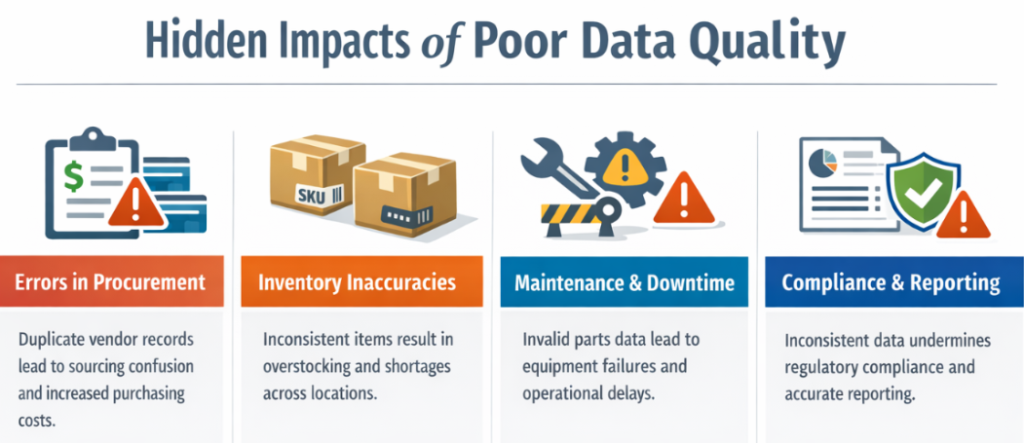
Wenn Ihr Unternehmen mit ineffizienten Stammdaten arbeitet, kann sich dies auf alle betrieblichen Aktivitäten auswirken, einschließlich Beschaffung, Bestandsverwaltung, Wartungsverfahren und Berichtsfunktionen. Verdantis Forschung hat herausgefunden, dass Ihr Unternehmen allein durch die Vermeidung von Doppelkäufen aufgrund ungenauer Daten potenziell $37,5 Mio. - $52,5 Mio. einsparen kann.
Die Datenqualität wirkt sich auf diese spezifischen Bereiche aus, die der direkten Beobachtung verborgen bleiben:
Fehler bei der Beschaffung
Doppelte Lieferantenberichte erzeugen inkonsistente Lieferantendaten, wodurch mehrere Lieferantendatensätze für einen einzigen Lieferanten entstehen. Der Beschaffungsprozess kann verwirrend werden, was das Risiko erhöht, die falschen Lieferanten auszuwählen und zu doppelten Einkäufen oder höheren Einkaufskosten führt. Die Beschaffungsteams müssen zusätzliche Zeit für die Datenüberprüfung aufwenden, wenn sie eigentlich Entscheidungen treffen sollten.
Ungenauigkeiten bei der Inventarisierung
Inkonsistente Artikelbeschreibungen und -klassifizierungen führen dazu, dass für ein und dasselbe Produkt zwei getrennte Lagerhaltungseinheiten gebildet werden. Dasselbe Material kann an verschiedenen Standorten in unterschiedlichen Formaten oder unter verschiedenen Namen vorhanden sein, was zu Überbeständen bei einigen Artikeln und Fehlbeständen bei anderen führt. Diese Situation führt zu erhöhten Kosten für die Pflege der Bestände und schafft gleichzeitig versteckte Hindernisse für die Überwachung der Bestände.
Unfähigkeit, die Ausrüstung zu warten und Betriebsausfallzeiten
In Umgebungen, die in hohem Maße von Anlagen abhängig sind, benötigen die Betreiber genaue Ersatzteildaten, da falsche oder fehlende Artikelinformationen zur Bestellung oder Bevorratung von ungültigen Teilen führen können. Dadurch verzögert sich die Arbeit des Wartungsteams, das die entsprechenden Komponenten finden muss. Dies führt schließlich zum Stillstand von Anlagen und hält den Geschäftsbetrieb auf.
Compliance und Berichterstattung
Die Finanzberichterstattung auf der Grundlage gesetzlicher Standards erfordert Stammdaten, die während des gesamten Berichtsprozesses stabil bleiben. Das Vorhandensein von abweichenden Daten zu Lieferantenartikeln oder Vermögenswerten in verschiedenen Systemen führt dazu, dass die Berichte gegensätzliche Werte anzeigen. Die Situation führt zu einem erhöhten Prüfungsrisiko und einem geringeren Vertrauen in die gemeldeten Ergebnisse.
Das bestehende System führt zu unzuverlässigen Ergebnissen, wenn es keine Datenkonsistenz zwischen Prozessen und Systemen gibt. Die Stammdatenverwaltung sorgt für die Einheitlichkeit der Daten bereits bei ihrer Erstellung.
Die wichtigsten Funktionen der Oracle MDM-Lösung für MRO
Oracle MDM-Lösungen sorgen für einen konsistenten Datenfluss.
- Die Stammdaten stammen aus den Quellsystemen, einschließlich ERP und EAM, und erreichen die MDM-Schicht.
- Das System von Oracle Enterprise Data Quality wendet Validierungs- und Standardisierungsregeln auf jeden eingehenden Datensatz an.
- Die Abgleichslogik verwendet Regeln, um doppelte Datensätze zu finden und gleichzeitig festzustellen, welcher Datensatz beibehalten werden sollte.
- Die Data Stewards verwenden etablierte Arbeitsabläufe, um Ausnahmesituationen zu behandeln, die sie überprüfen müssen.
- Das System kennzeichnet genehmigte Datensätze als goldene Datensätze, die mit nachgelagerten Systemen synchronisiert werden.
Oracle MDM bietet Kernfunktionen, die diesen operativen Prozess ermöglichen.
- Datenverwaltung: Es legt fest, wie die Stammdaten verwaltet, kontrolliert und gepflegt werden. Das Dateneigentum für jeden Bereich, zu dem auch Beschaffungs- und Lieferantendaten gehören, wird bestimmten Dateninhabern zugewiesen. Die Datenverantwortlichen sind für zwei Aufgaben zuständig, nämlich die Verwaltung der täglichen operativen Datenqualität und die Bearbeitung von Ausnahmen. Die Datenverwaltung System verwendet Genehmigungsworkflows, um Datenänderungen auf der Grundlage von Benutzerrollen zu kontrollieren und gleichzeitig Prüfpfade zu erstellen, die jede Änderung für die Einhaltung von Vorschriften und die Rückverfolgbarkeit erfassen.
- Management der Datenqualität: Der Prozess der Datenstandardisierung und der Erkennung von Duplikaten stellt sicher, dass die Stammdaten korrekt und konsistent bleiben. Der Prozess reduziert die Datenduplizierung und verbessert die Zuverlässigkeit der Daten.
- Konsolidierung der Daten: Oracle MDM führt in erster Linie eine Datenkonsolidierung durch, indem es Informationen aus verschiedenen Systemen zusammenführt, um eine einzige einheitliche Struktur zu schaffen. Das System schafft eine einzige Quelle der Wahrheit durch den Abgleich von Datensätzen, der die Konsistenz von Identifikatoren in verschiedenen Systemen gewährleistet.
- Datenanreicherung: Der Prozess des Meisters Datenanreicherung beinhaltet das Ergänzen fehlender Attribute bei gleichzeitiger Verbesserung der Klassifizierungsstandards. Dazu gehören das Hinzufügen detaillierter Beschreibungen und die Standardisierung von Kategorien, während zusätzliche Referenzdaten aufgenommen werden.
Das System nutzt diese Fähigkeiten, um kontrollierte Datenumgebungen einzurichten, die es ermöglichen, dass Stammdaten ihren konsistenten Zustand über die Zeit hinweg beibehalten, während sie zuverlässig zwischen verschiedenen Systemen und Geschäftsprozessen übertragen werden.
Die Rolle von KI und Automatisierung im modernen MDM
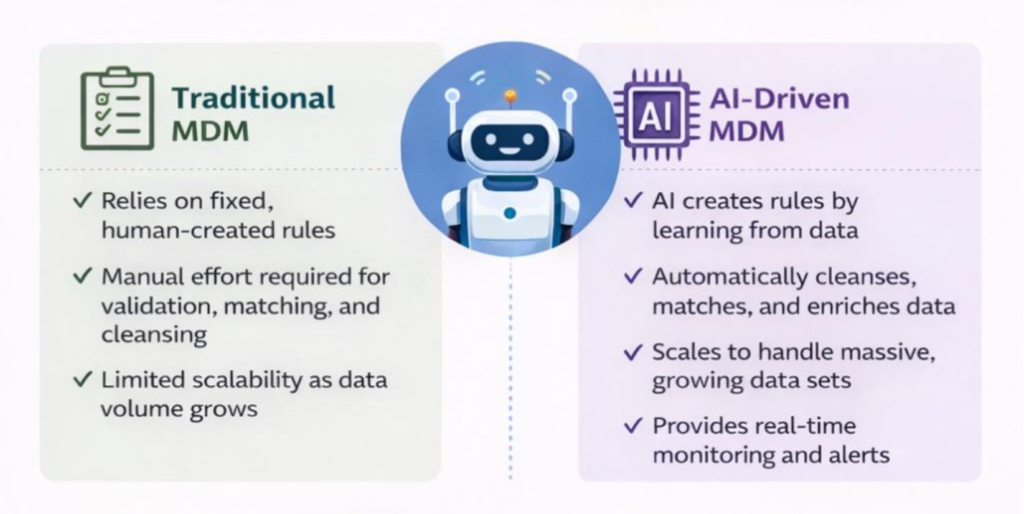
KI-gesteuerte MDM-Funktionen unterstützen:
Automatisierte Datenbereinigung: Algorithmen entdecken bestehende Format-, Einheiten- und Beschreibungsinkonsistenzen, die dann in standardisierte Daten umgewandelt werden, ohne dass manuelle Arbeit für einzelne Datensätze erforderlich ist.
Intelligenter Abgleich: Das maschinelle Lernen modelliert Datensatzmuster, die es ermöglichen, doppelte Datensätze aus verschiedenen Datenformaten und unvollständigen Daten zu identifizieren. Durch diesen Prozess verbessert die KI ihre Abgleichsfähigkeiten.
Datenanreicherung: KI schätzt fehlende Attribute, die sie dann anhand von Standardtaxonomien klassifiziert und verbesserte Beschreibungen erstellt, indem sie frühere Daten und Referenzmaterialien verwendet.
Kontinuierliche Datenüberwachung: Automatisierte Prozesse überwachen die Datenqualität über mehrere Zeiträume hinweg. Sie erkennen abnormale Datenmuster und starten operative Prozesse, sobald Datenabweichungen festgestellt werden.
KI-Funktionen verwandeln MDM von einem traditionellen, reaktionsbasierten Rahmen in ein System, das sich durch kontinuierliche Verbesserungen weiterentwickelt. Wenn Oracle eine Struktur und ein Governance-Framework bereitstellt, wird dieses durch KI erweitert, indem die Datenqualität verbessert, der manuelle Aufwand reduziert und eine konsistente Datenverwaltung in großem Umfang ermöglicht wird. MRO-Prozesse müssen automatisiert werden, um die Datengenauigkeit über mehrere Unternehmenssysteme hinweg zu bewahren, da das Datenvolumen ständig wächst.
Wie MDM mit dem Geschäftsbetrieb verbunden ist
Die Auswirkungen von MDM auf den täglichen Betrieb werden deutlich, wenn Sie sich ansehen, wie Daten in operative Entscheidungen in den Bereichen Beschaffung, Lieferkette und Finanzen einfließen. Die Stammdaten stehen in direktem Zusammenhang mit wichtigen operativen Bereichen.
- MRO-Beschaffung hängt von genauen Artikel- und Lieferantendaten ab. Ersatzteile müssen klar definiert, korrekt klassifiziert und mit zugelassenen Lieferanten verknüpft sein. Bei inkonsistenten oder unvollständigen Artikelbeschreibungen bestellen die Beschaffungsteams am Ende die falschen Teile oder duplizieren den vorhandenen Bestand.
- Planung der Lieferkette Systeme sind auf Stammdaten angewiesen, um die Nachfrage zu prognostizieren und die Lagerbestände zu verwalten. Produktdefinitionen, Maßeinheiten und Klassifizierungen haben Einfluss darauf, wie diese Nachfragesignale interpretiert werden. Wenn die Daten inkonsistent oder unzuverlässig sind, kann die Prognose ungenau sein, was zu Überbeständen an einigen Standorten und zu Engpässen an anderen führt.
- Finanzielle Berichterstattung Systeme benötigen konsistente Stammdaten für genaue Berichte. Artikelkosten, Lieferaufzeichnungen und Anlagendaten fließen in Finanzsysteme und Leistungskennzahlen ein. Wenn sich die Stammdaten in den verschiedenen Systemen ändern, zeigen die Berichte widersprüchliche Ergebnisse an, was einen Abstimmungsaufwand erfordert und das Vertrauen in die Finanzergebnisse verringert.
Diese betrieblichen Abhängigkeiten zeigen, dass die Daten nicht in den Systemen bleiben. Wenn die Stammdaten konsistent sind, laufen die Prozesse wie erwartet und liefern die gewünschten Ergebnisse. Fragmentierte Daten fließen in andere Systeme ein, was zu geschäftlicher Ineffizienz führt.
Häufige Herausforderungen bei der Implementierung von Oracle MDM
Oracle MDM bietet die Struktur, die erforderlich ist, um konsistente Daten über alle betrieblichen Funktionen hinweg zu erhalten. Die Implementierung von Oracle MDM erfordert jedoch mehr als nur den Einsatz von Technologie. Viele Herausforderungen ergeben sich aus der Art und Weise, wie Daten in der Realität systemübergreifend vorhanden sind und wie Unternehmen die Eigentumsverhältnisse und Prozesse rund um diese Daten verwalten.
Bei der Implementierung treten häufig mehrere Probleme auf:
- Fragmentierte Daten in verschiedenen Systemen: In ERP-, Beschaffungs- und EAM-Systemen sind die Stammdaten in der Regel in verschiedenen Formaten gespeichert. Diese Unterschiede führen zu Konflikten, wenn Sie versuchen, Datensätze in einer einzigen Struktur zu konsolidieren, da die Daten zunächst standardisiert werden müssen.
- Ursprüngliche Datenqualität: Vorhandene Daten können Duplikate, fehlende Attribute oder inkonsistente Klassifizierungen aufweisen. Eine ordnungsgemäße Datenbereinigung ist erforderlich, damit diese Probleme nicht in das MDM-System übernommen werden und dessen Effektivität beeinträchtigen.
- Fehlendes Eigentum: In einigen Unternehmen ist es oft schwierig zu definieren, wer für bestimmte Datendomänen zuständig ist. Ohne definierte Rollen sind Governance-Prozesse inkonsistent und schwer durchsetzbar.
- Integration von manuellen Prozessen: Datenvalidierung, -abgleich und -korrektur werden im Allgemeinen als manuelle Prozesse betrachtet. Dies verlangsamt die MDM-Implementierung und führt zu Schwankungen bei den Ergebnissen. Menschliche Fehler sind bei manuellen Prozessen keine Seltenheit.
- Widerstand gegen Prozessänderungen: Geschäftsteams sträuben sich möglicherweise gegen neue Governance-Workflows oder Datenstandards, insbesondere wenn diese Änderungen an bestehenden Praktiken erfordern.
Die Unternehmen sind möglicherweise bereit, in die Technologie zu investieren. Herausforderungen bei der Implementierung entstehen durch Lücken bei der Datenbereitstellung, der Unternehmensführung und der organisatorischen Ausrichtung
Bewährte Praktiken zur Überwindung von Herausforderungen bei der MDM-Implementierung
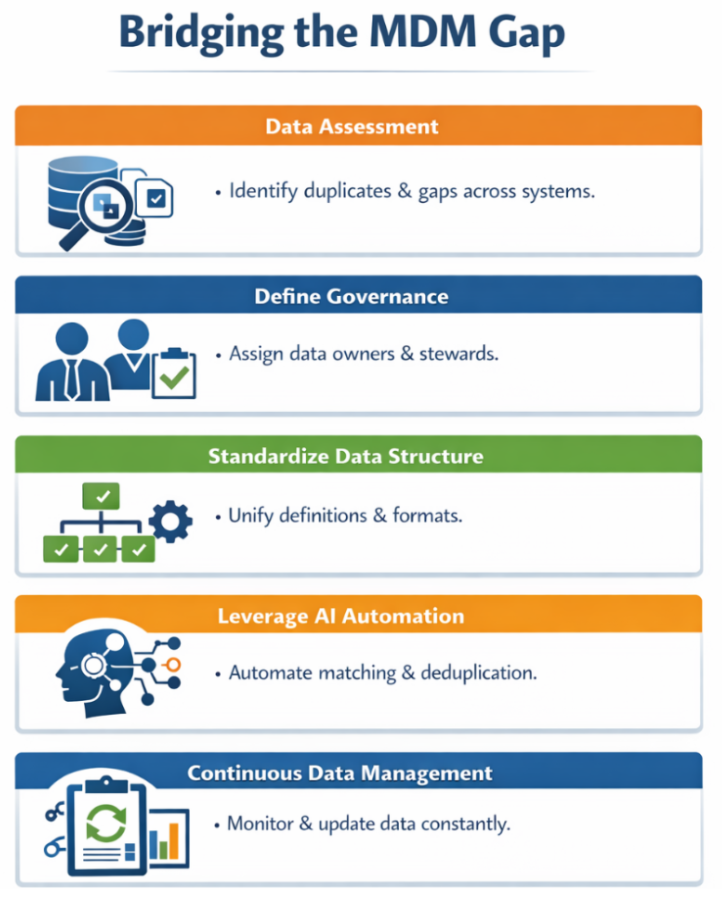
Bestehende Technologielösungen lösen die Probleme mit Stammdaten nicht. Das strukturierte System des MDM liefert nicht die beabsichtigten Ergebnisse, weil es den Unternehmen an einer angemessenen Datenverarbeitung und an Implementierungsverfahren mangelt. Die folgenden Praktiken sprechen diese Lücke direkt an.
- Bewertung der Daten: Bewerten Sie die Stammdaten in allen Systemen, bevor Sie mit Konfigurationsänderungen oder der Entwicklung von Governance-Richtlinien fortfahren. Durch die Inspektion des Systems auf doppelte Einträge, fehlende Attribute und doppelte Datensätze wird eine Basislinie erstellt. Es zeigt Ihnen, wo die Qualitätsprobleme liegen, so dass Sie Ihre Bemühungen auf die Situationen konzentrieren können, die den größten betrieblichen Nutzen bringen, anstatt Ressourcen für alle Aufgaben zu verschwenden.
- Definieren Sie Governance: Legen Sie zuerst die Eigentumsverhältnisse fest, bevor Sie mit der Definition von Regeln fortfahren. Der Dateneigentümer legt die Richtlinien für die Datendomäne fest, während der Datenverwalter die laufenden Datenqualitätsoperationen verwaltet. Es braucht eine Zuweisung der Verantwortlichkeit an bestimmte Personen. Das Fehlen festgelegter Verantwortlichkeiten führt dazu, dass Governance-Dokumente nicht umgesetzt werden, während sich Datenprobleme immer weiter auftürmen, ohne dass jemand dafür zuständig ist.
- Datenstruktur standardisieren: Stammdaten werden aufgrund unterschiedlicher Datendefinitionen, Benennungsregeln und Klassifizierungssysteme zwischen den Systemen unzuverlässig. Die nachgelagerten Prozesse funktionieren nicht mehr, wenn verschiedene Systeme unterschiedliche Definitionen für dieselbe Entität verwenden. Die Standardisierung behebt die Quelle dieser Inkonsistenz. Die Einführung der Automatisierung des Abgleichs trägt zur Verbesserung der Daten bei.
- Verwenden Sie AI: Manuelle Arbeitsmethoden sind nicht mehr in der Lage, Datenoperationen zu verwalten, wenn die Datenumgebungen kompliziert werden. Das automatisierte System übernimmt den Abgleich und die Erkennung von Duplikaten, indem es große Datenmengen verarbeitet und dabei festgelegte Regeln zur Einhaltung von Prüfstandards verwendet.
Kontinuierliche Datenverwaltung: Unternehmen müssen MDM als fortlaufende Aktivität implementieren. Stammdaten bleiben durch kontinuierliche Überwachungs- und Überprüfungsprozesse korrekt.
Fazit
Oracle Master Data Management-Lösungen schaffen ein strukturiertes System für Unternehmen, um wichtige Geschäftsinformationen über mehrere Systeme hinweg zu verwalten. Der Erfolg von Oracle MDM hängt von der Datenqualität ab. MDM fungiert als Plattform zur Datenspeicherung und -verwaltung, verlangt aber von den Unternehmen, dass sie ihre Daten korrigieren und im gesamten System ergänzen.
Die Geschäftsprozesse eines Unternehmens erfordern Datenqualität als Grundvoraussetzung für eine erfolgreiche Ausführung. Unternehmen können ihren MDM-Ansatz erweitern mit Verdantis Lösungen die Oracle MDM ergänzen. Sie ermöglichen die Standardisierung und Anreicherung von Daten, um eine kontinuierliche Verbesserung der Datenqualität durch KI zu erreichen. Wenn Unternehmen ihre Governance- und Datenqualitätsprozesse synchronisieren, werden ihre Stammdaten zu einem zuverlässigen Asset, das die betriebliche Effizienz steigert.
Häufig gestellte Fragen (FAQs)
Was ist der Unterschied zwischen Oracle MDM und EDM?
Oracle MDM konzentriert sich auf die Verwaltung von Daten, die sich auf zentrale Geschäftseinheiten wie Kunden, Lieferanten und Artikel beziehen, um einen konsistenten Stammdatensatz für alle Systeme zu gewährleisten. Oracle EDM konzentriert sich auf die Verwaltung von Unternehmensdatenstrukturen wie Hierarchien, Dimensionen und Metadaten, um Governance und Änderungskontrolle über Anwendungen hinweg zu etablieren.
Korrigiert Oracle MDM automatisch Daten von schlechter Qualität?
Nein, Oracle MDM korrigiert nicht automatisch Daten von schlechter Qualität in großem Umfang. Es bietet Governance-Frameworks, Validierungsregeln und Workflows zur Kontrolle und Verwaltung von Daten. Die Ergebnisse hängen von den Daten ab, die in MDM eingehen.
Warum ist MDM für Initiativen zur Unternehmensautomatisierung so wichtig?
KI-Analysen benötigen konsistente, strukturierte, genaue und zuverlässige Daten. Fragmentierte Stammdaten führen zu ungenauen Erkenntnissen und mindern die Glaubwürdigkeit von Automatisierungsergebnissen. KI-Automatisierungssysteme benötigen standardisierte, systemübergreifend abgestimmte Stammdaten, um Beziehungen zwischen Datenpunkten für Vorhersagen und Entscheidungsfindung genau zu interpretieren.