
Comment un grand fabricant latino-américain de biens de consommation a élaboré un dossier commercial modulaire pour l'optimisation de la maintenance, de la réparation et de l'exploitation (MRO), permettant ainsi à la direction de choisir la portée du projet plutôt que d'accepter une proposition « tout ou rien ».
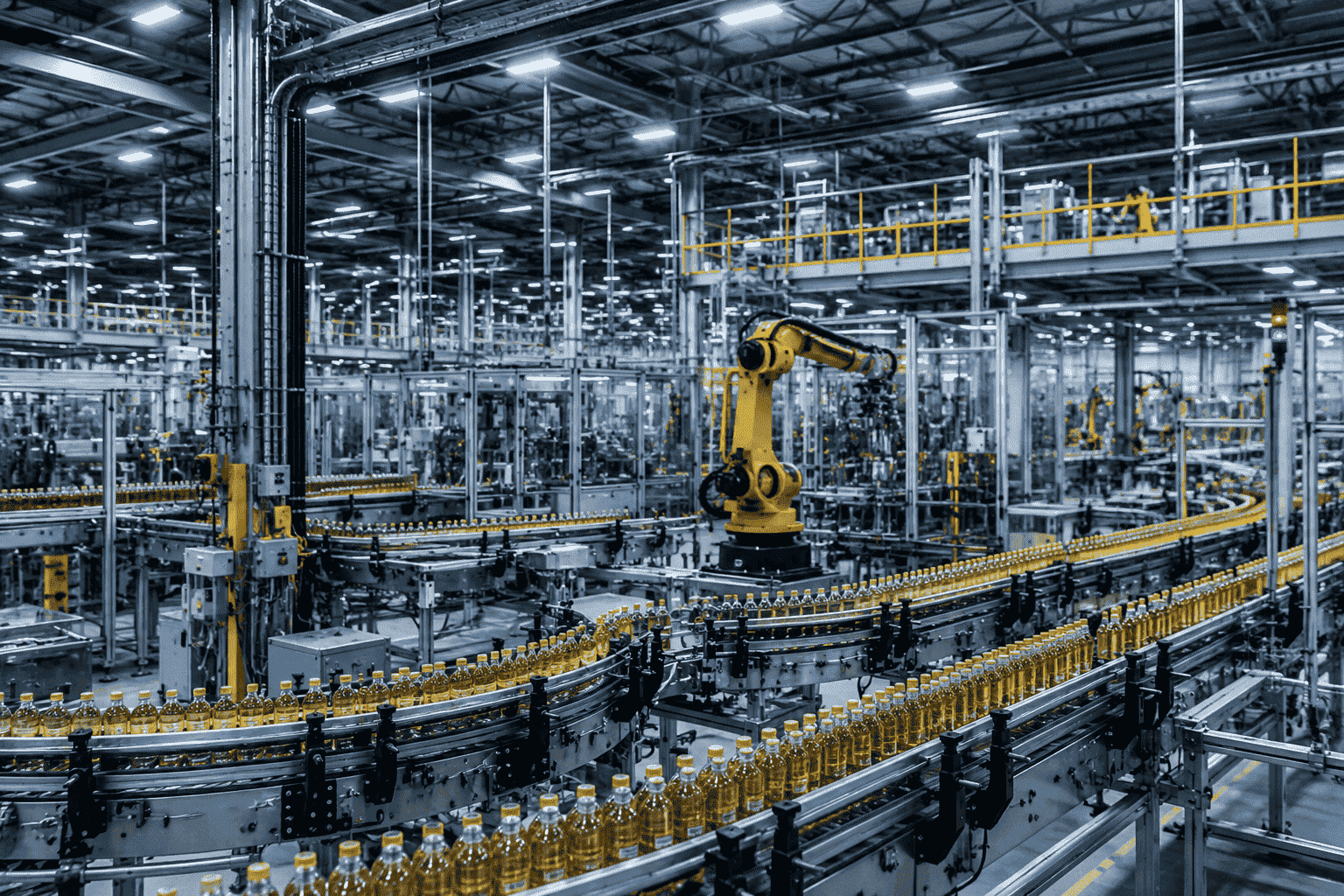
Un grand fabricant latino-américain de biens de consommation, dont les marques sont très connues dans leurs secteurs respectifs, qui exploite un réseau d'usines dans toute la région, le tout sur une seule instance ERP, avec des dizaines de milliers de Références MRO et une importante communauté chargée de la planification de la maintenance. Ses produits se vendent au rythme du marché de détail, ce qui signifie que ses lignes de remplissage, de conditionnement et de transformation doivent elles aussi fonctionner à ce rythme.
Plutôt que de présenter une proposition « tout ou rien », l’analyse de rentabilité a été élaborée sous la forme de deux scénarios sur le même parc informatique, ne différant que par la couverture des modules, afin que la direction puisse voir précisément ce que chaque extension de périmètre apporte. Comme chaque site utilisait déjà la même instance ERP, les modules au niveau du réseau pouvaient fonctionner dès le premier jour : les excédents d’une usine étaient visibles et transférables vers toutes les autres usines, la décision « achat ou transfert » étant chiffrée en termes de coûts logistiques, sans qu’un programme d’intégration préalable soit nécessaire.
Les chiffres relatifs au client figurant dans cette étude de cas sont exprimés sous forme de ratios afin de préserver la confidentialité. Le chiffre concernant les temps d'arrêt correspond à une référence sectorielle publiée et non à un chiffre spécifique au client. L'étude de cas a été élaborée à partir des chiffres d'exploitation fournis par le client.
La fabrication à grande échelle de biens de consommation résume le problème de la maintenance, de la réparation et de l’exploitation (MRO) à deux chiffres étroitement liés : le capital immobilisé dans les pièces de rechange à l’échelle du réseau, et les milliers d’incidents imprévus qui surviennent chaque année et interrompent le fonctionnement des chaînes de production. Sur une chaîne de production de biens de consommation, la question des stocks et celle de la disponibilité des équipements ne font qu’un, et ces deux aspects étaient gérés site par site.
Le document téléchargeable aborde ces deux scénarios module par module, explique les calculs qui sous-tendent l'augmentation et précise pourquoi le coût lié à la disponibilité n'a pas été pris en compte dans le scénario de référence.
Découvrez toute l'histoire derrière cette transformation.
Vos coordonnées sont utilisées uniquement pour acheminer cette conversation. Consultez notre Politique de confidentialité .
Ces deux scénarios remplissaient chacun de leur côté les critères requis ; c'est le calcul de l'écart entre les deux qui a fait pencher la balance.
| Système métrique | Résultat |
|---|---|
| Reprise | Moins de 6 mois, quel que soit le scénario |
| Rendement sur l'incrément | environ 4,5 fois le surcoût lié à l'ajout des deux modules |
| Bénéfice net sur trois ans | Augmentation d'environ 70% entre le scénario 1 et le scénario 2 |
| Économie sur les coûts de détention | ~221 TP3T par an sur le capital libéré |
| Achats évités | ~1% de dépenses annuelles en maintenance, réparation et révision (MRO), contre des valeurs de référence publiées comprises entre 5 et 15% |
| Coût des temps d'arrêt | ~$39 000 par heure, référence publiée du secteur, et non un chiffre fourni par un client |
Les temps d'arrêt évités ont été délibérément exclus du scénario de référence et présentés comme un avantage supplémentaire, à quantifier par rapport aux propres relevés de temps d'arrêt du client plutôt que d'être avancés d'emblée.
Responsable de la disponibilité des lignes sur l'ensemble d'un réseau où l'absence d'une pièce de rechange entraîne non seulement un arrêt de la production, mais aussi un coût financier.
Combler le fossé entre les règles de gestion des stocks propres à chaque site et la visibilité à l'échelle du réseau sur un ERP commun.
Évaluer un dossier commercial modulaire en se basant sur des paliers de coûts, et non sur une proposition « tout ou rien ».
Exploiter une seule instance ERP sur l'ensemble du réseau, sans avoir besoin d'un programme d'intégration pour étendre ses fonctionnalités.
Si vos usines partagent un ERP mais pas leurs pièces de rechange, le même cas de figure basé sur des scénarios peut être élaboré à partir de vos chiffres, en quelques jours.

Carnegie Center, bureau 300,
Princeton, NJ 08540, Tél. : +1 (866) 987-4463

Times Square, 3e étage, aile « B », Andheri Kurla Road,
Andheri Est, Mumbai – 400059
Copyright © 2026. Tous droits réservés.