

Die Beschaffung ist heute nicht mehr nur eine Unterstützungsfunktion, sondern spielt eine entscheidende Rolle bei der Steigerung des Geschäftswerts, dem Risikomanagement und der Unterstützung von Nachhaltigkeitszielen.
Entscheidend für diese Entwicklung sind die Qualität und die Verwaltung der Beschaffungsstammdaten. Durch die Integration von Beschaffungsstammdatenmanagement (MDM) in strategische Beschaffungs- und Betriebsprozesse können Unternehmen messbare Vorteile in Bezug auf Effizienz, Kosteneinsparungen und Compliance erzielen.
Verstehen von Beschaffungsstammdaten
Procurement Master Data Management bezieht sich auf den strukturierten Prozess der Organisation, Standardisierung und Pflege wichtiger Daten in Bezug auf Lieferanten, Materialien und Dienstleistungen. Diese Daten bilden die Grundlage für alle Beschaffungs- und Einkaufsaktivitäten und sind unerlässlich, um die Effizienz zu steigern, Risiken zu reduzieren und fundierte Entscheidungen zu ermöglichen.
Saubere und konsistente Beschaffungsdaten, insbesondere für Materialien und Dienstleistungen wie MRO, sind in anlagenintensiven Branchen wie Fertigung, Energie, Öl & Gas und Bergbau von entscheidender Bedeutung, da sie sich direkt auf die Zuverlässigkeit der Anlagen, die Lagerkosten und die Betriebszeit auswirken.
Da Unternehmen über verschiedene Standorte und Systeme hinweg expandieren, werden die Beschaffungsdaten fragmentiert, was zu Ineffizienzen, redundanten Datensätzen, Nichteinhaltung von Vorschriften und schlechter Leistung der Lieferanten führt. Ein einheitliches MDM-Framework löst diese Herausforderungen, indem es:
Zentralisierung und Standardisierung von Lieferanten- und Artikeldaten
Schaffung einer einzigen Quelle der Wahrheit über ERP-, CMMS- und Beschaffungsplattformen
Unterstützung einer effizienten Beschaffung, Zusammenarbeit mit Lieferanten, Bestandsoptimierung und Compliance
Obwohl es sich bei den Beschaffungsstammdaten nicht um ein eigenständiges ERP-Modul handelt, unterstützt es alle Beschaffungsvorgänge, von der Ausführung des Einkaufs bis zur Verwaltung von Verkäuferdaten indem Sie konsistente und vertrauenswürdige Daten im gesamten Unternehmen sicherstellen.
A 2025 Gartner-Bericht festgestellt, dass 49% der Beschaffungsleiter zitieren Genauigkeit und Zuverlässigkeit der Daten als eine große Herausforderung, trotz 68% der CPOs investieren in KI und generative Technologienwas auf eine kritische Lücke in der Datenreife und Analysebereitschaft hinweist.
Finden Sie die richtigen Teile, Lieferanten und Einblicke






Arten von Beschaffungsstammdaten
Eine effektive Beschaffung hängt von der genauen und gut gepflegten Verwaltung verschiedener Stammdatentypen ab. Diese grundlegenden Datendomänen dienen als Fundament für alle Einkaufsaktivitäten, von der ersten Anforderung bis zur endgültigen Zahlung.
Ein robustes Stammdaten-Framework gewährleistet Konsistenz, Compliance und Effizienz über den gesamten Beschaffungszyklus hinweg. Zu den wichtigsten Kategorien von Beschaffungsstammdaten und ihren typischen Attributen gehören:
1. Material-Stammdaten
Kontrollieren Sie wichtige Einstellungen wie:
Art der Beschaffung (intern, extern oder beides)
Inventarbewertungsmethode (Standardpreis oder gleitender Durchschnitt)
Erforderliche Datensichten bei der Erstellung des Materialstamms
Für MRO werden die Materialstammdaten besonders detailliert und kritisch, da es sich oft um Ersatzteile, Verbrauchsmaterialien, Werkzeuge und Sicherheitsausrüstung handelt. Dieser Bereich bietet eine umfassende Beschreibung jedes materiellen Gegenstands, der beschafft, gelagert und verwendet wird.
Wichtige Attribute & Daten enthalten:
1. Kern-Identifikation
Schlüsselattribute & Beispiele
- Teilenummer/SKU: z.B., INT-0002345, SKF-6205-2RS
- Beschreibung: z.B., Lager, Kugel, Zweireihig, Abgedichtet, SKF
- Warennummer: z.B., UNSPSC 31171504 (Kugellager)
- OEM & Cross-Ref-Nummern: z.B., ABB-435634 / Siemens-ABX12
- Hersteller: z.B., SKF, ABB, Siemens
- Zeichnung Nr.: z.B., DWG-334/Rev B
2. Technische Daten
Schlüsselattribute & Beispiele
- Spezifikationen: z.B., ID: 25mm, OD: 52mm, Breite: 15mm
- UOM: EA, KG, L, M
- SDS Link: Erforderlich für Schmiermittel, Chemikalien
- Gefahrenflaggen: z.B., Entflammbar, Giftig
- Haltbarkeitsdauer: z.B., 24 Monate (Versiegelung)
- Garantie: z.B., 12 Monate ab Installationsdatum
3. Bestandsaufnahme & Planung
Schlüsselattribute & Beispiele
- Standort: z.B., Lager A, Behälter 03-C4
- Bedingungen: z.B., Unter 25°C aufbewahren
- Bestellpunkt: 10 Einheiten
- Min/Max Bestand: 5/50 Einheiten
- Vorlaufzeit: 14 Tage
- Verwendungsrate: Monatlicher Durchschnitt: 20 Stück
- Kritikalität: z.B., A - Risiko von Ausfallzeiten
- Veraltete Flagge: z.B., Ja - Ersetzen durch PN 123456
4. Kalkulation & Bewertung
Schlüsselattribute & Beispiele
- Bewertungsklasse: 3000 - Rohmaterial
- Standard Preis: $45.20/Einheit
- Letzter Kaufpreis: $47.00 von Anbieter X
2. Dienst-Stammdaten
Definiert immaterielle Dienstleistungen. Weniger Wert auf physische Attribute, mehr auf beschreibende und vertragliche Bedingungen. Dienstleistungsstammdaten definieren beschaffte Dienstleistungen (wie Wartung, Beratung, IT-Support) innerhalb von ERP-/Beschaffungssystemen. Sie enthalten Beschreibungen, Kategorien, Preise, Lieferanten und Vertragsbedingungen.
Warum es wichtig ist
- Bietet eine einheitliche, genaue Übersicht über alle Beschaffungsgüter und -dienstleistungen
- Ermöglicht Ausgabenanalyse, Kostenkontrolle und Compliance
- Unterstützt eine bessere Lieferantenauswahl und ein besseres Risikomanagement
- Erfordert abteilungsübergreifende Zusammenarbeit (IT, HR, Einrichtungen), um auf dem Laufenden zu bleiben
- Aussagekräftige Servicedaten helfen dabei, bessere Verträge auszuhandeln und sich an den Geschäftsanforderungen zu orientieren.
Wichtige Attribute & Daten enthalten:
1. Service Definition
Schlüsselattribute & Beispiele
- Dienstnummer : Eindeutige ID, z.B. SERV-00123
- Servicebeschreibung : "Vorbeugende Wartung für Pumpe P-101", "HVAC System Inspection"
- Dienstleistungskategorie : "Elektrische Dienstleistungen", "Reinigungsdienste", "Kalibrierung"
- Service Typ : "Vor Ort", "Festpreis", "Zeit & Material", "Remote"
- Maßeinheit : "HR" (Stunden), "DAY" (Tag), "TRIP" (Reise), "EA" (Jeder), "KM" (Kilometer)
- Qualifikationsanforderungen / Zertifizierungen : "Zertifizierter Elektriker", "Level 2 HVAC-Techniker"
2. Preisgestaltung & Verträge
Schlüsselattribute & Beispiele
- Standardtarif/Preis : "$150/HR", "$500 pro Fahrt"
- Preis Währung : "USD", "EUR", etc.
- Preis Gültigkeitsdauer : "01-Jan-2025 bis 31-Dez-2025"
- Überstundensätze : "$200/HR nach 18 Uhr"
- Reisekosten : "$0,75 pro KM", "Pauschal $100 pro Besuch vor Ort"
- Service Level Agreements (SLAs) : "Antwort in 4 Stunden", "Lösung innerhalb von 24 Stunden"
- Garantie auf Service : "30 Tage Garantie auf die Verarbeitung"
3. Operative Verknüpfungen
Schlüsselattribute & Beispiele
- Zugehörige Ausrüstung / Vermögenswert : "Anwendbar auf Kessel B-302", "Nur für CNC-Drehmaschine"
- Sicherheitsanforderungen : "Betreten enger Räume", "Verriegelung/Tagout erforderlich"
- Einhaltung gesetzlicher Vorschriften : "Entspricht OSHA 1910", "ISO 17020 zertifizierte Inspektion erforderlich"
3. Lieferanten-/Lieferantenstammdaten
In diesem Bereich werden alle wichtigen Informationen in Bezug auf die externen Partner eines Unternehmens konsolidiert. Er ist oft mit Kerndaten, Adressdaten, Bankdaten und unternehmensspezifischen Daten strukturiert.
Wichtige Attribute & Daten enthalten:
1. MRO-Spezialisierung/Fähigkeiten
Schlüsselattribute & Beispiele
- MRO-Anbieter Typ : "OEM-Vertriebspartner", "Ersatzteillieferant", "Spezialisierter Serviceanbieter"
- Angebotene Produkt-/Dienstleistungskategorien : "Lager", "Elektrischer Bedarf", "Pumpen & Ventile", "Hydraulische Reparaturdienste"
- Verfügbarkeit des technischen Supports : "24/7-Hotline", "Dedizierter Tech Rep für Tier 1-Konten"
- Reparatur- und Kalibrierungsdienste : "Pumpenreparatur", "ISO 17025 zertifizierte Kalibrierung für Druckmessgeräte"
- Lokales Lager/Lagerpräsenz : "Lagerhaus in Mumbai", "Regionales Drehkreuz in Houston für schnelle Lieferung"
- Mindestbestellwert / Menge : "Kein Minimum", "$100/Bestellung Minimum", "MOQ von 5 Einheiten für bestimmte Teile"
2. Leistungs- und Beziehungsdaten
Schlüsselattribute & Beispiele
- Notdienstfähigkeit : "Notfalllieferung innerhalb von 4 Stunden", "Unterstützung am Wochenende verfügbar"
- Lieferantenbewertung für MRO: "Bewertung 4.8/5 für die Einhaltung der Vorlaufzeit", "95% pünktliche Lieferung für kritische Ersatzteile"
- Effizienz des Retourenprozesses : "RMA in 3 Tagen bearbeitet", "Selbstbedienungs-Retourenportal für falsche Teile".
4. Einkaufsinfosätze (PIRs)
PIRs für MRO-Artikel sind entscheidend für die Standardisierung der Beschaffung von häufig bestellten Teilen bei bestimmten Lieferanten und die Aufrechterhaltung wettbewerbsfähiger Preise.
Wichtige Attribute & Daten (Schwerpunkt MRO):
- Verknüpfung von Material-/Leistungsnummer und Lieferantennummer
- Bestelleinheit (unterscheidet sich oft von der Basis-UOM für große MRO-Käufe)
- Nettopreis und Preiseinheit (z.B. "USD 10.00 / 100 PC")
- Geplante Lieferfrist (sehr wichtig für kritische Ersatzteile)
- Mindestbestellmenge / Verpackungsgröße
- Materialnummer des Lieferanten (die interne Teilenummer des Lieferanten für Querverweise)
- Letztes Kaufdatum & letzter gezahlter Preis
- Toleranzgrenzen bei der Rechnungsprüfung (aufgrund des hohen Volumens bedeutet ein niedriger Wert oft größere Toleranzen)
5. Verträge & Preisvereinbarungen
MRO-Verträge haben oft die Form von Rahmenverträgen oder Master Service Agreements, um wiederkehrenden Bedarf zu decken und die Ausgaben zu optimieren.
Wichtige Attribute & Daten enthalten:
- Vertragsart (z.B. Rahmenbestellung für allgemeine Verbrauchsmaterialien, Service Level Agreement für Wartungsverträge)
- Zielwert/Quantität (kann für eine Kategorie von MRO-Artikeln oder für die Gesamtausgaben mit einem Lieferanten sein)
- Gültigkeitszeiträume
- Spezifische Preisgestaltung (z. B. gestaffelte Preise auf der Grundlage des Jahresvolumens, Festpreise für bestimmte Wartungsaufgaben)
- Rabattvereinbarungen (üblich für MRO, um Anreize für die Konsolidierung von Ausgaben zu schaffen)
- Service-Level-Bedingungen (z.B. garantierte Betriebszeit für Geräte, maximale Reaktionszeiten bei Ausfällen)
- Geografische Abdeckung (bei Serviceverträgen, welche Regionen/Anlagen abgedeckt sind)
- Anfahrtskosten/Minimalgebühren für Servicebesuche
- Strafklauseln für die Nichteinhaltung von SLAs.
6. Asset-Stammdaten
Asset-Stammdaten sind zwar keine "Beschaffungs"-Stammdaten im eigentlichen Sinne, aber sie sind grundlegend mit der MRO-Beschaffung verflochten. Sie definieren die Geräte und Einrichtungen, die gewartet werden müssen, und somit auch die MRO-Teile und -Dienstleistungen.
Wichtige Attribute & Daten enthalten:
- Asset-ID (Eindeutiger Identifikator)
- Asset-Beschreibung (z. B. "CNC-Fräsmaschine - Haas VF-2")
- Asset-Typ/Kategorie (z.B. "Pumpe", "Motor", "Fahrzeug", "HLK-Gerät")
- Standort (Werk, Abteilung, Arbeitsplatz)
- Hersteller, Modell, Seriennummer
- Installationsdatum, Inbetriebnahmedatum
- Enddatum der Garantie
- Kritikalitätseinstufung (Auswirkungen auf die Produktion bei Ausfall dieser Anlage)
- Zugehörige MRO-Teileliste/Stückliste (BOM) (wichtig für die Verknüpfung von Assets mit den spezifischen Ersatzteilen, die sie verbrauchen)
- Wartungspläne (präventiv, prädiktiv) und Wartungshäufigkeit
- Letztes Wartungsdatum, nächstes Fälligkeitsdatum
- Servicehistorie (Links zu Serviceaufträgen und den verwendeten MRO-Teilen)
Die effektive Verwaltung dieser MRO-spezifischen Stammdatentypen ist von entscheidender Bedeutung für die Minimierung von Ausfallzeiten, die Optimierung von Lagerbeständen (Vermeidung von Fehlbeständen und Überbeständen von oft teuren Ersatzteilen), die Rationalisierung des Einkaufsprozesses für eine große Anzahl kleiner Transaktionen und eine bessere Kontrolle der MRO-Ausgaben. Oft ist es das Fehlen von sauberen, standardisierten MRO-Stammdaten, das in großen Unternehmen zu erheblichen Ineffizienzen und versteckten Kosten führt.
Nach Angaben des IBM Institute for Business Value (Juni 2025) erwarten frühe Anwender von KI-gesteuerten Beschaffungsinnovationen eine 12% Verbesserung des ROI, 20% Steigerung der Produktivität, 14% Steigerung der betrieblichen Effizienz, und 11% Steigerung der Rentabilität. Bis 2027 rechnen sie außerdem mit 41% bessere Beschaffungseffizienz, 49% mehr berührungslose Rechnungsverarbeitung, 36% höhere Konformität, und 43% verbesserte Transparenz der Ausgaben in Echtzeit.
Wer nutzt die Beschaffungsstammdaten
Beschaffungsdaten unterstützen die Entscheidungsfindung in allen Funktionen:
Branchen, die stark auf Beschaffungsstammdaten angewiesen sind
Wo Beschaffungsdaten verwendet werden
Die Stammdaten der Beschaffung sind integriert in:
- ERP-Systeme (SAP, Oracle, Microsoft Dynamics)
- eProcurement-Tools (Coupa, Ariba)
- Lieferantenportale und Verwaltung des Vertragslebenszyklus (CLM) Werkzeuge
- CMMS/EAM-Systeme (Maximo, Infor, SAP PM)
- Analytische Dashboards für Ausgaben, Compliance und Lieferantenleistung
Überblick über den Beschaffungsmanagementprozess
Beschaffungsfunktionen folgen in der Regel zwei Hauptarbeitsabläufen:
- Beschaffung-zu-Zahlung (P2P): Deckt alles ab, von der Bestellanforderung bis zur Bezahlung der Lieferanten.
- Quelle-zu-Vertrag (S2C): Dazu gehören die Suche nach Lieferanten, Ausschreibungen, Bewertungen und Vertragsabschlüsse.
Jeder Schritt hängt von zuverlässigen Stammdaten ab. Selbst kleine Fehler, wie ein doppelter Lieferant oder eine falsche Maßeinheit, können den Einkauf verzögern oder finanzielle Risiken auslösen.
Die Verwaltung von Beschaffungsstammdaten beginnt mit der Extraktion von Daten aus Rechnungen, Bestellungen und Katalogen. Verdantis Harmonize bereinigt, standardisiert und bereichert Material- und Lieferantendaten und verknüpft sie mit Stücklisten, Arbeitsaufträgen und Lieferantendatensätzen. Über Integrity können Benutzer neue Materialien oder Lieferanten über kontrollierte Workflows anfordern.
Die fertigen Daten werden in ERP-Systeme integriert und ermöglichen eine genaue Beschaffung, eine bessere Ausgabentransparenz und einen schnellen, durchsuchbaren Zugriff auf vertrauenswürdige Informationen.
Der gesamte Prozess, von der Datenerfassung bis zur Teilebestellungkönnen automatisiert werden, so dass die Benutzer mit einem einzigen Befehl auf dem analytikgesteuerten Beschaffungs-Dashboard Bestands-, Lieferanten- und Preisdaten sofort abgleichen können.
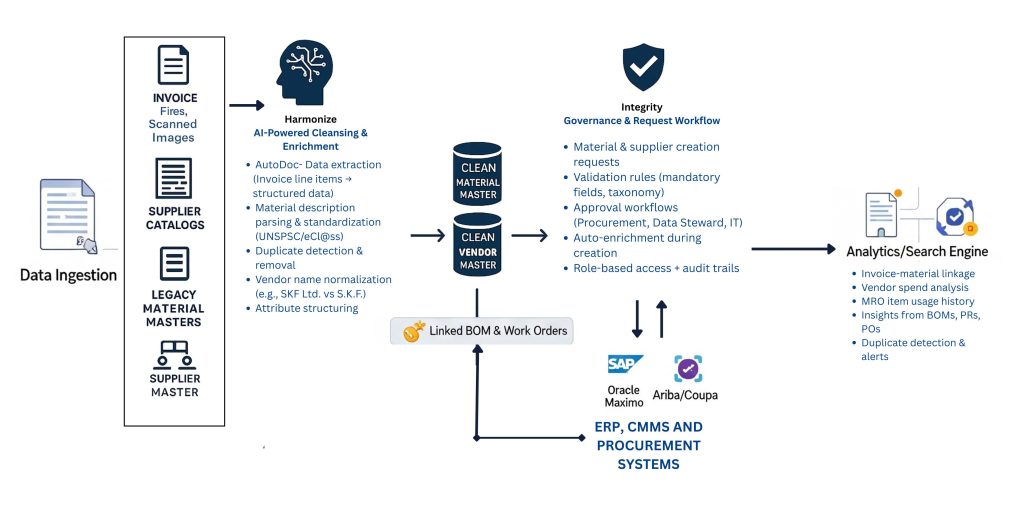
Schritt-für-Schritt-Prozess für die Verwaltung von Beschaffungsstammdaten
Procurement Master Data Management sorgt für strukturierte, vollständige und standardisierte Dienstleistungs- und Lieferantendatensätze in Ihren Unternehmenssystemen - von Lieferantenprofilen bis hin zu Dienstleistungsdefinitionen, Preisgestaltung, Compliance und Transaktionsdaten.
Zielsetzung: Extrahieren Sie rohe Beschaffungsdaten aus verstreuten Plattformen und Dokumenten in einen zentralisierten Stammdatensatz.
Wie es funktioniert:
Verdantis AutoDoc AI, intelligenter Dokumentenverarbeitungsagent, nimmt strukturierte und unstrukturierte Beschaffungsdaten auf:
ERP-Systeme (SAP, Oracle, Microsoft Dynamics)
eProcurement-Tools (Ariba, Coupa)
Verträge, RFQs, SLAs, Rechnungen (PDF, Excel, gescannte Dokumente)
Datenbanken, Kataloge und Tabellenkalkulationen von Anbietern
AutoDoc AI parst und identifiziert:
Anbieterprofile, Leistungsbeschreibungen
Preiskonditionen, Servicekategorien
Vertrags-Metadaten (z.B. Start-/Enddatum, AGBs)
Das Ergebnis: Ein einheitlicher, strukturierter Datensatz, der für die Profilerstellung, Klassifizierung und Standardisierung bereit ist.
Zielsetzung: Klassifizieren Sie Anbieter und Dienstleistungen in standardisierte Beschaffungskategorien zur Analyse und Kontrolle.
Wie es funktioniert:
Verdantis AutoClass AI:
Übersetzt mehrsprachige Beschreibungen mit AutoTrans AI
Kategorisiert Datensätze in Taxonomien wie:
Identifiziert übergeordnete Service-Gruppierungen (z.B. "Elektrische Wartung" → "Facility Services")
Das Ergebnis: Strukturierte Klassifizierung zur Unterstützung der Ausgabenanalyse, der Beschaffungsstrategie und der Anpassung an die Compliance.
Zielsetzung: Definieren Sie Attributsätze für jede Servicekategorie oder jeden Lieferantentyp.
Wie es funktioniert:
Die Vorlagen enthalten Pflichtfelder wie z.B.:
Für Dienstleistungen: Service-Nummer, UOM, SLA, Preise, Zertifizierungen
Für Verkäufer: Lieferantentyp, Compliance-Dokumente, Notfallfähigkeit, Bewertung
Attribute werden definierten Serviceklassen zugeordnet, z.B.:
"Vorbeugende Wartung für Pumpen" → [Servicekategorie: Mechanische Wartung, UOM: HR, SLA: 48 Std.]
Das Ergebnis: Strukturierte Vorlagen sorgen für einheitliche und vollständige Service-/Lieferanteneinträge.
Zielsetzung: Extrahieren und ordnen Sie detaillierte Informationen aus alten Beschreibungen und Dokumenten zu.
Wie es funktioniert:
AutoSpec AI,
- AutoSpec AI, Agent zur Attributextraktion und Datenzuordnung für MRO-Daten extrahiert Daten wie:
"USD 150/Stunde, 24/7 Service, Genehmigung für enge Räume erforderlich" →
Satz: 150 USD/HR
Verfügbarkeit: 24/7
Sicherheit: Betreten enger Räume
Bezieht Metadaten von:
SLAs, Verträge, Rechnungen
Formulare für die Einbindung von Anbietern
Das Ergebnis: Beschaffungsunterlagen werden strukturiert, durchsuchbar und vergleichbar.
Zielsetzung: Standardisieren Sie die Felder system- und länderübergreifend.
Wie es funktioniert:
UOM-Normalisierung: "HR", "Stunden", "hr" → "HR"
Währungsstandardisierung: ₹, INR → "INR"
Textformatierung: "Zertifizierter Schweißer Level-2" → "Zertifizierter Schweißer, Level 2"
Das Ergebnis: Konsistente und saubere Daten, die Analysen und Integration unterstützen.
Zielsetzung: Erweitern Sie Service-/Lieferantendatensätze um fehlende Felder und kontextbezogene Informationen.
Wie es funktioniert:
AutoEnrich AI für automatische Extraktion und Zuordnung von Attributen verwendet:
OEM-/Anbieter-Websites, Kataloge, Portale zur Einhaltung von Vorschriften (z. B. ISO, OSHA)
Zuvor bereinigte interne Aufzeichnungen
Branchen-Benchmarks (Tarifkarten, SLA-Normen)
Beispiele:
Anbietereintrag fehlende Sicherheitszertifikate → automatisch vom Portal ausgefüllt
SLA-Reaktionszeit auf der Grundlage des Anbieters und der bisherigen Leistung
Das Ergebnis: Umfangreichere, informativere Aufzeichnungen, die das Beschaffungsrisiko verringern und die Entscheidungsfindung beschleunigen.
Zielsetzung: Markieren Sie veraltete Lieferanten, abgelaufene Verträge oder nicht konforme Serviceaufzeichnungen.
Wie es funktioniert:
SpareSeek AI kennzeichnet veraltete Teile und identifiziert:
Abgelaufene Lizenzen oder Versicherungen
Nicht verlängerte Verträge oder inaktive Anbieter
Doppelte Lieferantencodes in verschiedenen Geschäftseinheiten
Das Ergebnis: Risikobehaftete oder irrelevante Datensätze werden markiert, deaktiviert oder archiviert.
Zielsetzung: Eliminieren Sie Duplikate in Lieferanten- und Servicedaten.
Wie es funktioniert:
Stufe 1: Fuzzy und Token Matching →. "ABC Tech Ltd." vs. "A.B.C. Technologies"
Stufe 2: Semantisches Clustering mit AutoClass AI
De-Duplizierungslogik verwendet:
PAN/VAT-Nummern
Kontakt/E-Mail-Felder
Service-Definitionen
Das Ergebnis: Ein Anbieter = ein sauberer Datensatz für das gesamte Unternehmen.
Zielsetzung: Übertragen Sie bereinigte Beschaffungsstammdaten in ERP-, Beschaffungs- und Analysesysteme.
Wie es funktioniert:
Ausgabeformate, die mit SAP MM, Ariba, Oracle Fusion, Coupa, etc. abgestimmt sind.
Die Daten werden validiert und hochgeladen über Verdantis Integrität
Lokalisierte Benennung (über AutoTrans AI), wo erforderlich
Das Ergebnis: Saubere, geordnete, unternehmensweite Beschaffungsstammdaten, die zur Unterstützung von Beschaffung, Zahlungen, Compliance und strategischen Entscheidungen bereitstehen.
Zielsetzung: Erhalten Sie langfristig die Qualität der Beschaffungsdaten, deren Einhaltung und Kontrolle.
Wie es funktioniert:
Weisen Sie Datenverantwortliche zu und definieren Sie klare Eigentumsverhältnisse für Service-, Material- und Lieferantendatensätze.
Richten Sie automatisierte Arbeitsabläufe für Änderungsanfragen und Genehmigungen ein (über Verdantis Integrity)
Implementieren Sie regelmäßige Audits, Ausnahmeberichte und automatische Qualitätsprüfungen.
Sicherstellen, dass die Governance-Richtlinien durch Geschäftsregeln und rollenbasierten Zugriff durchgesetzt werden
Das Ergebnis: Ein nachhaltiger Governance-Rahmen, der sicherstellt, dass die Beschaffungsstammdaten im gesamten Unternehmen sauber, konsistent, konform und revisionssicher sind.
Der Einfluss von MDM auf die Beschaffung
MDM bietet einen Mehrwert für die Beschaffung in den folgenden drei Schlüsselbereichen
> Verfügbarkeit > Kosten > Haftung >
Fall 1:
Wertschöpfung durch Sicherstellung der Verfügbarkeit:
Unternehmen stehen in der Regel vor dem Problem der Verfügbarkeit von Ersatzteilen oder gar Rohstoffen. Das eigentliche Problem ist jedoch nicht die Verfügbarkeit, sondern die Sichtbarkeit. In vielen Fällen wird das vorhandene Material unter verschiedenen Artikelnamen und Beschreibungen klassifiziert, wodurch ein fast künstlicher Mangel an Verfügbarkeit entsteht.
Fall 2:
Wertschöpfung durch Kostenmanagement:
Unternehmen, die auf globaler Ebene beschaffen, stoßen auf dieselben Produkte mit unterschiedlicher Nomenklatur und Beschreibung. Dies kann auch bei den verschiedenen Maschinenteilen vorkommen. So kann es vorkommen, dass die Beschaffungsabteilung dieselbe Komponente zu unterschiedlichen Preisen von den Lieferanten bezieht.
MDM hilft bei der Konsolidierung dieser Diskrepanzen, indem es eine einheitliche Definition von Materialien im gesamten Unternehmen gibt. Dies hilft der Beschaffungsabteilung, die mit der Lagerhaltung verbundenen Kosten zu senken. Die Konsolidierung von Komponenten wirkt sich auch direkt auf die Lagerhaltungskosten aus, indem sie für optimale Lagerbestände sorgt.
Beispiel: Durchschnittliche berücksichtigte Gesamtkosten für den Bestand 6.3% des Jahresumsatzes eines Unternehmens. Für ein hypothetisches Unternehmen mit $150 Millionen pro Jahr einnimmt, bedeutet eine Reduzierung der Lagerhaltungskosten um 15% eine jährliche Einsparung von mehr als $1,4 Millionen
MDM spielt, wie bereits erwähnt, eine entscheidende Rolle bei der Reduzierung der Lagerbestände und wirkt sich somit direkt auf die Rentabilität des Unternehmens aus.
Fall 3:
Wertschöpfung durch Haftungsmanagement:
Verbindlichkeiten in einem Unternehmen ergeben sich im Wesentlichen aus Verbindlichkeiten aus Lieferungen und Leistungen.
Da es keine gemeinsame Nomenklatur gibt, steigen die Lagerbestände unweigerlich an, was zu höheren Verbindlichkeiten führt. MDM sorgt für optimierte Lagerbestände und damit für geringere Verbindlichkeiten.
Sehen wir uns an, wie sich MDM auf diese Beschaffungsbereiche auswirkt,
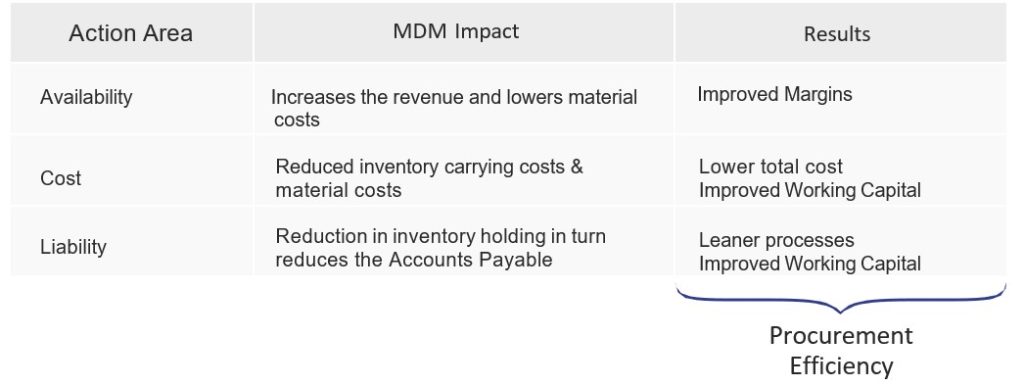
Beschaffung & MRO Stammdaten
Stammdatenmanagement für MRO-Teile ist ein wichtiger Bestandteil, auf den sich Beschaffungsteams verlassen.
MRO steht für "Maintenance, Repairs & Operations" (Wartung, Reparatur und Betrieb), und das Datenmanagement spielt eine Schlüsselrolle, wenn es darum geht, das richtige Teil zur richtigen Zeit bereitzustellen, um die Herstellungs- und Wartungsprozesse auf dem neuesten Stand zu halten.
Jede falsche Verwaltung von MRO-Daten wirkt sich direkt auf Beschaffungsentscheidungen aus und kann die Kosten für die Lagerhaltung erhöhen ODER zu Produktionsausfällen führen, die alle direkt mit falschen Beschaffungsentscheidungen in Verbindung gebracht werden können.
Warum ist die Beziehung wichtig?
Nehmen wir ein Beispiel, bei dem das von Lieferant ABC verkaufte Ersatzteil A bereits in den MRO-Stammdaten vorhanden ist und mit Gerät X als kritisches Ersatzteil verknüpft ist, das jederzeit verfügbar sein muss;
Im Laufe des Betriebs findet dasselbe Ersatzteil, das von einem anderen Lieferanten XYZ verkauft wird, ebenfalls seinen Weg in das System. Aufgrund mangelhafter Data-Governance-Praktiken, die doppelte Teile auf der Grundlage von Attributen, Maßeinheiten und Merkmalen einfach nicht aussortieren können, wird dieses identische Ersatzteil ebenfalls als Eintrag angelegt und folglich beschafft, wodurch der Lagerbestand unnötig vergrößert wird und die Betriebskosten weiter steigen.
Grundlegende Beschaffungsdaten für strategische Operationen
Informationen zu Anbietern, Onboarding-Daten, Risikoprofil, Compliance-Dokumentation, Finanzdaten und Leistungsindikatoren.
Teilenummern, Beschreibungen, Klassifizierungen, Spezifikationen, SKUs, Kataloge, vertraglich vereinbarte Dienstleistungen, SLAs und Preisschemata.
Beschaffungshistorie, Leistungsüberprüfungen und Lieferantenbenchmarks im Laufe der Zeit.
Vertraglich vereinbarte Dienstleistungen, Service Level Agreements (SLAs), Preisstrukturen und Beschaffungskategorien.
Bestellungen, Rechnungen, Beschaffungshistorie, Zahlungsbedingungen und Liefertermine.
Rechtliche Verträge, Geschäftsbedingungen, Aufzeichnungen zur Einhaltung von Vorschriften, Zertifizierungen und Prüfpfade.
Saubere, zuverlässige Beschaffungsdaten sind entscheidend für die Unterstützung von Funktionen wie strategische Beschaffung, Vertragsmanagement, Ausgabenanalyse, Überwachung der Lieferantenleistung und digitale Beschaffungsautomatisierung. Besonders wertvoll sind sie in Sektoren wie der Fertigungsindustrie, der Öl- und Gasindustrie, dem Energiesektor und dem Bergbau, wo genaue MRO-Beschaffungsdaten direkte Auswirkungen auf Ausfallzeiten und Produktionskontinuität haben können.
Hochwertige Beschaffungsdaten unterstützen auch ein effektives Compliance- und Risikomanagement, insbesondere in regulierten Branchen. So können Beschaffungs- und Finanzteams vertrauensvoll mit Lieferanten zusammenarbeiten, interne Audit-Standards erfüllen und die Beschaffungsvorgänge auf die allgemeinen Unternehmensziele abstimmen.
Die geschäftlichen Auswirkungen von Beschaffungsstammdaten
Beschaffungsstammdaten sind mehr als nur Lieferantennamen und Leistungscodes, sie sind die Grundlage für jede Beschaffungsentscheidung, jede Vertragsverhandlung und jeden Zahlungszyklus. Wenn diese Daten mangelhaft oder inkonsistent sind, hat dies Auswirkungen auf das gesamte Unternehmen. Wenn sie jedoch sauber, vollständig und gut verwaltet sind, sind die Vorteile messbar und bedeutend.
Geschäftliche Konsequenzen von schlechten Beschaffungsstammdaten
Konsequenz | Auswirkungsbereich | Beispiel Metriken / Geschäftsauswirkungen |
Doppelte Anbieter | Lieferantenmanagement | 15-25% der Lieferantenbasis ist oft überflüssig und erhöht das Risiko und den Verwaltungsaufwand |
Ungenaue Material-/Dienstleistungsbeschreibungen | Fehler beim Einkaufen | Bis zu 12% der POs erfordern Nacharbeit oder Rücksendungen aufgrund unklarer Beschreibungen |
Falsche Preisangaben oder Infosätze | Finanzieller Verlust | Überzahlungen und undichte Verträge können jährlich 1-2% der Gesamtausgaben kosten. |
Verpasste Compliance-Anforderungen | Risiko & Recht | 100% Versagen der behördlichen Prüfung in einigen Branchen ohne Steuer-ID / ESG-Flags |
Automatisierung der Beschaffung gestört | Operative Effizienz | eProcurement oder Guided Buying Tools werden mit unsauberen Daten unwirksam |
Verzögerungen bei der Beschaffung | Time-to-Value | Verzögertes Onboarding von Lieferanten oder Beschaffungszyklen durch 10-15% aufgrund von unvollständigen Daten |
Geschäftliche Auswirkungen von gut verwalteten Beschaffungsstammdaten
Auf der anderen Seite, wenn die Beschaffungsstammdaten gut strukturiert und verwaltet werden, sind die Ergebnisse transformativ:
Die Rationalisierung von Lieferanten durch datengestützte Erkenntnisse kann die Anzahl der Lieferanten um 10-15% und schalten Sie Mengenrabatte frei.
Durch die Rationalisierung von Lieferanten und Materialien in den verschiedenen Werken vermeiden Sie die Verlagerung von Ausgaben nach hinten und nutzen die ausgehandelten Preise.
Der Abgleich von Lieferanten- und Rechnungsdaten senkt die Abweichungsrate durch 30%, um Verzögerungen bei der Zahlungsabwicklung zu vermeiden.
Durch die Eliminierung doppelter und veralteter Artikel können Unternehmen überschüssige MRO-Bestände erheblich reduzieren und so Betriebskapital freisetzen.
Saubere, klassifizierte Service- und Materialdaten verbessern den Lieferantenabgleich, die Angebotserstellung und den Angebotsvergleich.
Zuverlässige, angereicherte Artikel-/Dienstleistungsstammdaten führen Benutzer zu bevorzugten Lieferanten und Verträgen innerhalb von Beschaffungsplattformen.
Häufige Anwendungsfälle und Kundenerfolge
Die Lösungen von Verdantis zur Verwaltung von Beschaffungsdaten ermöglichen es führenden Unternehmen, die Beschaffung zu rationalisieren, die Einbindung von Lieferanten zu verbessern und die Ausgaben mit genauen, standardisierten Stammdaten zu kontrollieren.
Die KI-gesteuerten Werkzeuge von Verdantis. AutoEnrich AI, AutoClass AI, AutoTrans AI, und Integrität - unterstützt globale Unternehmen bei der Bereinigung, Anreicherung und Verwaltung von Beschaffungsstammdaten in komplexen ERP-, S2P- und SCM-Ökosystemen.
Leistungsmetriken & KPIs für den Erfolg von Beschaffungsstammdaten
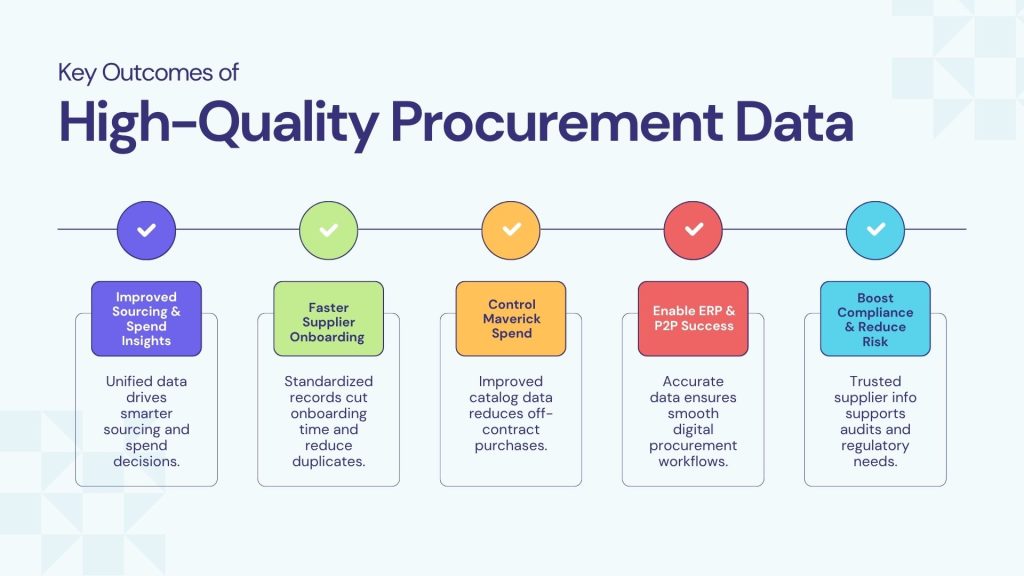
Um den langfristigen Nutzen von Initiativen zum Management von Beschaffungsstammdaten zu gewährleisten, ist es wichtig, die richtigen Metriken zu verfolgen. Diese KPIs helfen bei der Messung der Datenqualität, der Beschaffungseffizienz und des ROI von Stammdateninitiativen:
% der vollständigen Lieferanten-/Materialstammdaten
Was es misst: Bei wie vielen Stammsätzen sind alle erforderlichen Felder ausgefüllt - einschließlich Spezifikationen, Klassifizierungscodes, Beschaffungsdetails und Compliance-Daten.
Ziel: >95% Vollständigkeit
Beispiel:
Ein führendes Energieversorgungsunternehmen stellte fest, dass nur 62% seiner Lieferantenstammdaten über gültige Steueridentifikatoren und Kontaktangaben verfügten. Nach der Anreicherung stieg die Vollständigkeit sprunghaft auf 97% an, was die Einbindung der Lieferanten und die Zahlungszyklen beschleunigte.
Reduzierung von doppelten Datensätzen
Was es misst:Wie viele doppelte oder redundante Daten aus dem Lieferanten- oder Artikelstamm entfernt wurden.
Ziel: ≥80% Ermäßigung
Beispiel:
Ein globales Öl- und Gasunternehmen eliminierte 18.000 doppelte MRO-Teilenummern (insgesamt 30%) mithilfe von KI-gestützter Bereinigung. Dies sparte ~$6,5 Mio. an Lagerhaltungskosten und verbesserte die Transparenz der Ausgaben.
Zeit für das Onboarding neuer Anbieter
Was es misst:Durchschnittliche Zeit (in Tagen), um neue Lieferantendatensätze zu validieren, zu genehmigen und zu aktivieren.
Ziel: <5 Arbeitstage
Beispiel:
Vor der Einführung von Master Data Governance benötigte ein Chemieunternehmen 12-15 Tage für die Aufnahme von Lieferanten. Durch die Automatisierung der Arbeitsabläufe und die Validierung der Daten konnte diese Zeitspanne auf 3 Tage reduziert werden, was die Verzögerungen bei dringenden Beschaffungen verringert.
Kürzung der Maverick-Ausgaben
Was es misst:Der Anteil der Ausgaben, die außerhalb von ausgehandelten Verträgen oder genehmigten Katalogen getätigt wurden.
Ziel: <5% der gesamten indirekten Ausgaben
Beispiel:
Bei einem Unternehmen der Schwerindustrie sanken die Ausgaben für Außenseiter von 21% auf 6%, indem sichergestellt wurde, dass alle Artikel und Dienstleistungen mit bevorzugten Lieferanten und genauen Preisen in ihrem ERP-System katalogisiert wurden.
Beschaffung-zu-Zahlung (P2P) Zykluszeit
Was es misst: Zeit, die von der Erstellung der Bestellanforderung bis zur Zahlung der Rechnung vergeht.
Ziel: <20 Tage für indirekte Käufe
Beispiel:
Ein Verpackungsunternehmen hat seinen P2P-Prozess von 42 auf 18 Tage verkürzt, indem es saubere Stammdaten in seine SAP- und Coupa-Systeme integriert hat. Dies verbesserte den Cashflow und stärkte die Lieferantenbeziehungen.
Fazit
Beschaffungsstammdaten sind nicht mehr nur eine Notwendigkeit für das Backend, sondern ein strategisches Gut, das die Effizienz der Beschaffung, die Ausgabenkontrolle und die digitale Transformation vorantreibt. Durch die Einführung eines intelligenten, KI-gesteuerten Frameworks zur Bereinigung, Standardisierung, Anreicherung und Verwaltung von Beschaffungsdaten können Unternehmen Ineffizienzen beseitigen, Kosten senken und die Zusammenarbeit mit Lieferanten beschleunigen.
Mit bewährten Prozessen und Best Practices können Unternehmen ihre Beschaffungsvorgänge von fragmentierten Datensilos auf ein einheitliches, intelligentes System umstellen, das bessere Entscheidungen unterstützt und einen messbaren ROI liefert. Verdantis unterstützt Unternehmen bei dieser Umstellung mit Automatisierung, Fachwissen und tiefer Integration in bestehende ERP- und Beschaffungssysteme.
Unternehmen, die eine starke Data Governance in ihre Beschaffungsstrategie einbinden, haben einen Wettbewerbsvorteil in Bezug auf Kosteneinsparungen, Flexibilität und Compliance.
Was die Leute fragen
Wie können saubere Beschaffungsdaten Beschaffungsentscheidungen verbessern?
Genaue und standardisierte Beschaffungsdaten bieten einen klaren Einblick in die Leistung von Lieferanten, Ausgabenkategorien und die Einhaltung von Verträgen und ermöglichen eine strategischere Beschaffung und bessere Verhandlungen.
Welche Arten von Beschaffungsdaten können mit Verdantis verwaltet werden?
Verdantis ist spezialisiert auf die Bereinigung und Verwaltung von Lieferantenstammdaten, Material- und Leistungsbeschreibungen, Einkaufsinfosätzen und Lieferantenklassifizierungen in verschiedenen Geschäftsbereichen und Systemen.
Ist KI für die Bereinigung von Beschaffungsdaten wirklich effektiv?
Ja. KI kann Duplikate, Inkonsistenzen und Lücken in Millionen von Datensätzen schnell identifizieren, die Datenqualität verbessern und den manuellen Aufwand für die traditionelle Bereinigung reduzieren.
Warum ist die Steuerung von Beschaffungsdaten wichtig?
Governance stellt sicher, dass die Beschaffungsdaten im Laufe der Zeit korrekt und konsistent bleiben. Mit definierten Regeln, Workflows und Prüfpfaden verhindert es den Verfall von Daten und unterstützt die Einhaltung von Vorschriften.
Wie lassen sich durch bessere Beschaffungsdaten unkonventionelle oder vertragsfremde Ausgaben reduzieren?
Wenn Beschaffungsteams über zuverlässige, durchsuchbare Daten zu genehmigten Lieferanten und Produkten verfügen, ist die Wahrscheinlichkeit geringer, dass sie Prozesse umgehen oder ungeplante Bestellungen aufgeben, was zu einer besseren Ausgabenkontrolle führt.
Unterstützt Verdantis die Integration mit bestehenden ERP- oder Sourcing-Plattformen?
Ja. Die Verdantis-Tools sind ERP-agnostisch und lassen sich in Systeme wie SAP, Oracle, Maximo und Coupa integrieren, um sicherzustellen, dass die Beschaffungsdaten auf allen Plattformen konsistent und synchronisiert sind.
Was sind die wichtigsten Vorteile der Verwendung von Verdantis für das Beschaffungsdatenmanagement?
Schnelleres Onboarding von Lieferanten, weniger doppelte Lieferanten, zuverlässigere Analysen, Kosteneinsparungen durch bessere Transparenz und stärkere Einhaltung von Vorschriften bei globalen Aktivitäten.