Global gold miner

Five mines, five SAP instances, one view of every spare.

~$26M
working capital released
47%
less emergency procurement
10 wks
to go live, SAP kept
Read the story
Product
Solutions
Customers
Resources
Company
Book a demoGet a free diagnostic
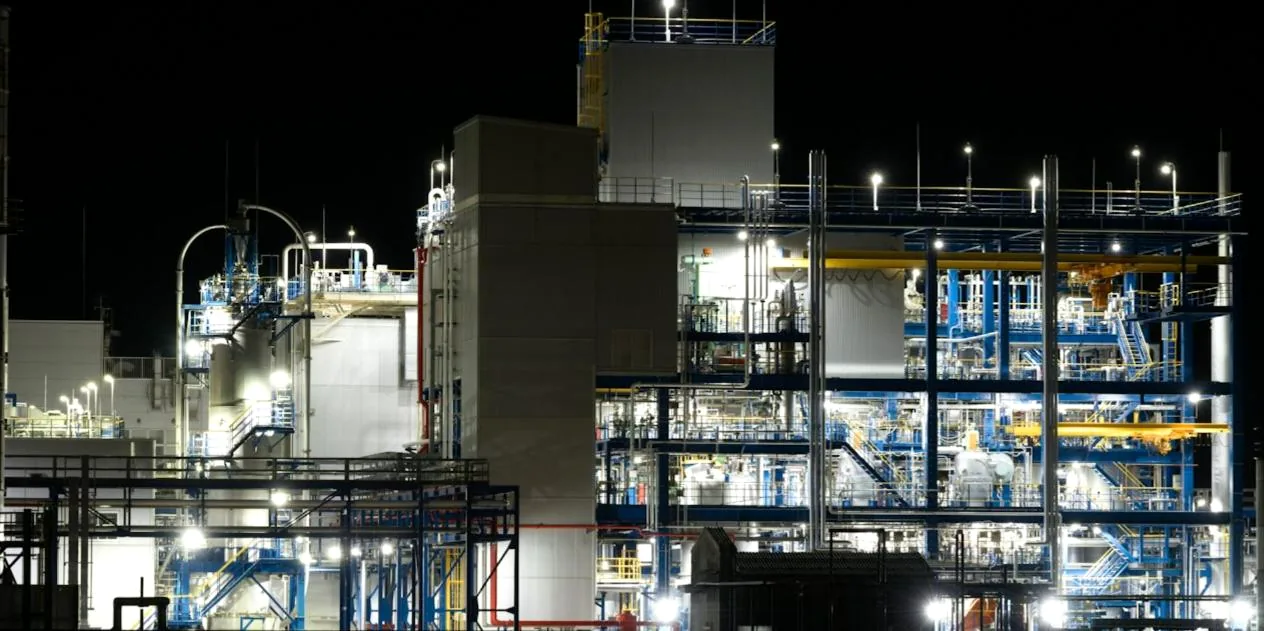
Chemical process plant at night
MRO360 for chemicals

Chemical plant spare parts management Certified parts on hand for every safety-critical asset.

In a continuous process, a missing or non-certified part on a pump or compressor is a safety and regulatory event before it's a cost. MRO360 keeps certified spares stocked across every plant and every turnaround.

$250K–$1.5Ma day for an unplanned chemicals shutdown
$500K–$2Mfor every day a turnaround overruns

In chemicals, the wrong part is a safety event first.

Continuous processes leave little room for a missing spare, and none for an uncertified substitute.

Certified substitutes only

ATEX-rated, pressure-rated and chemically resistant equipment needs documented, certified alternates, not whatever is on the shelf.

Turnarounds found short at the last minute

Late discovery of missing or non-certified parts is what turns a planned turnaround into an overrun.

Separate business lines, separate rules

Sites acquired or run as separate businesses score criticality and stock parts in their own way.

Five modules chemicals teams start with.

Chosen for safety-critical assets, certified parts and turnaround readiness.

  1. Spare Part CriticalitySafety and environmental impact weighted into every spare's score.
    Module
  2. Obsolete CheckDiscontinued parts found ahead, with alternates that carry the right certification.
    Module
  3. Demand ForecastingTurnaround demand forecast separately from run-rate use.
    Module
  4. Work Orders Planner and Vendor IntelligenceTurnaround work orders checked against stock weeks before the window.
    Module
  5. Inter-Plant TransferCertified spares at one site offered to another before anyone buys.
    Module
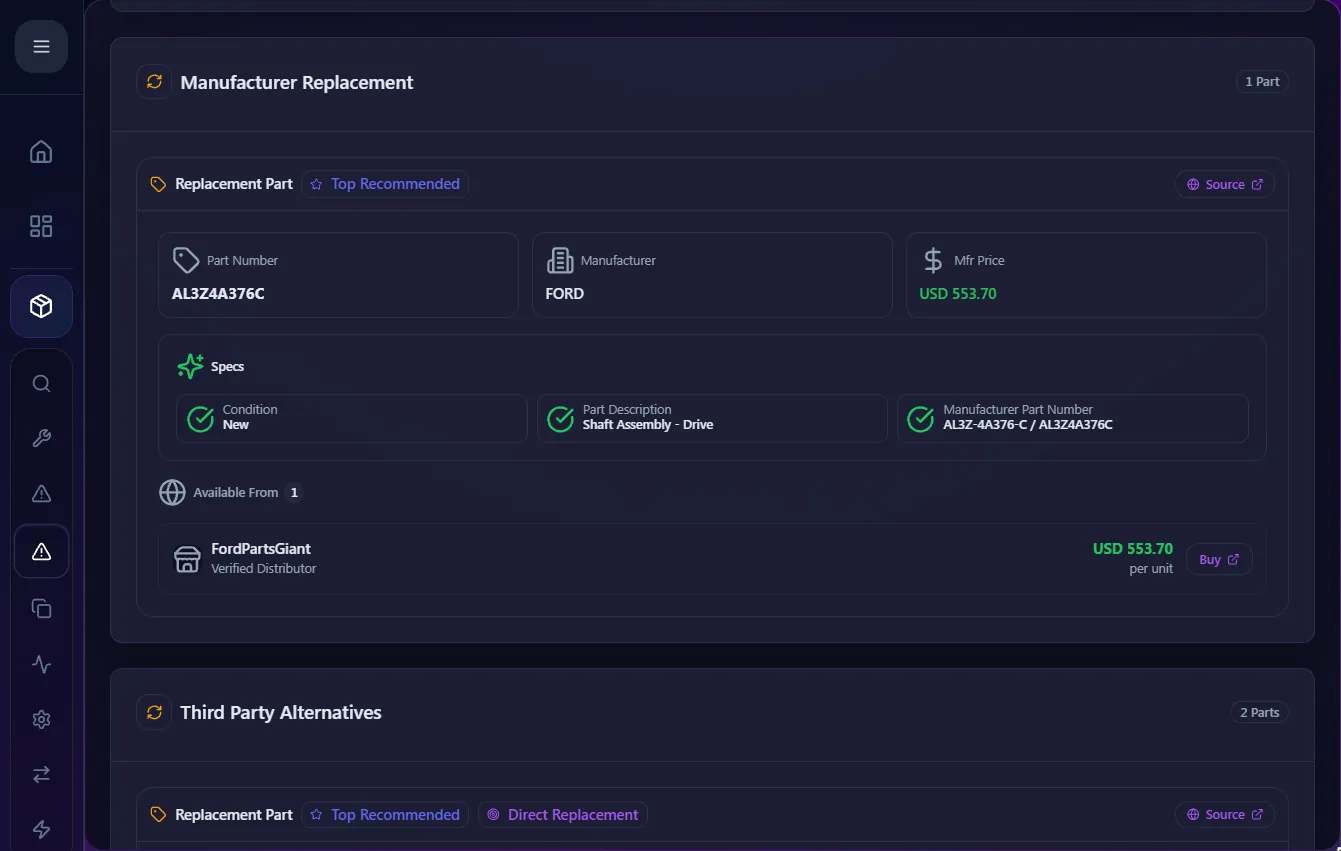
MRO360 obsolescence screen with ranked replacement parts

Turnarounds de-risked across a global network.

A specialty chemicals manufacturer with about 18 lithium, bromine and catalyst sites on mixed SAP and legacy systems.

Results reported as ranges~18 sites, mixed SAP and legacy CMMS

Lithium, bromine and catalyst plants on one standard.

Global specialty chemicals manufacturer

$10–40Mworking capital released
40–60%less emergency procurement
99%+turnaround parts availability
Read the case study
One standard
Reactors, compressors and heat exchangers across separate business lines scored on a common, defensible framework for the first time.Global specialty chemicals manufacturer

Further reading on chemical plant spare parts management

Questions from chemicals teams

How are certified alternates handled?

Alternates are proposed with their evidence and only linked to a part once an engineer approves. Nothing is substituted automatically.

Can we use one criticality standard across business lines?

Yes. That was the first result at a specialty chemicals manufacturer: reactors, compressors and heat exchangers scored on one defensible framework across separate business lines.

Does it work with a mix of SAP and a legacy CMMS?

Yes. The chemicals deployment below ran across about 18 sites on mixed SAP and legacy CMMS systems, without replacing either.

Get a turnaround parts review.

Send extracts from each site. We return the safety-critical spares at risk, certified alternates on file and turnaround gaps, valued per site.

One extract per site
Safety-critical gapsCertified alternatesTurnaround exposure
  • Safety-critical spares below a safe stock level
  • Discontinued parts without a certified alternate
  • Parts at risk for the next turnaround

Request a turnaround parts review

Free for multi-site chemicals operators. Run with an MRO specialist.

Request received. Pick a time for your kickoff call.

A short call with an MRO specialist. We'll also email a secure link for your extract.

Open the calendar in a new tab

Book A Demo

MRO Master Data Management for a leading $12Bn Oil and Gas company

Oil and Gas organizations face huge unwanted costs in the form of losses, penalties and compensation due to industrial accidents, taking a sizable chunk of their revenues. One of the important reasons for failures and accidents is the breakdown of key industrial infrastructure arising from ineffective management of the material base and inefficiencies in the MRO supply chain that are highly critical for the production and maintenance cycles.

More and more organizations are now looking to establish Master Data Management (MDM) implementations in order to manage their assets through informed decision-making based on reliable data and ensure optimal industrial safety across the enterprise.

About the company:

This US based company is a global leader in providing essential mechanical components for both land and offshore drilling rigs, complete drilling and well servicing rigs, as well as a comprehensive range of tubular inspection, internal coatings, drill string equipment, lifting and handling gear, and downhole drilling tools. It also offers supply chain services through distribution centers strategically located near major drilling and production sites worldwide. With over 800 manufacturing, sales, and service centers globally and annual revenues exceeding $12 billion, the company delivers customer-focused solutions tailored to meet the energy industry’s quality, productivity, and environmental needs.

Material Master Data Challenges

The company faced significant challenges with their master data.
• Lack of consistency and standards for the master data
• Incorrect, incomplete, unclassified and outdated attribute fields of master
data High volumes of data in multiple languages
• Multiple ERP and other legacy instances across the company
• Poorly structured material descriptions
• Lack of data governance and collaboration across cross-functional divisions and locations

Solution & Results Achieved

Solution: Material Master Data Harmonization & Ongoing Maintenance

The company implemented Verdantis Material Harmonize to cleanse and enrich its historical material master data. Using AI-powered tools and the Verdantis Content Repository, the solution classified, standardized, and eliminated duplicate materials.

Once the data was harmonized, Verdantis Material Integrity was deployed for ongoing data governance. It ensured continuous data accuracy through real-time validation, AI-driven classification, and duplication prevention, maintaining high data quality across enterprise systems.

Key Actions Taken:

  • Classified 150,000 materials into 1,210 UNSPSC and 500+ HTS codes
  • Parsed and normalized unstructured material attributes
  • Eliminated duplicates and enriched material descriptions
  • Established real-time data governance and approval workflows
  • Created a centralized repository for cross-functional data access

Results Achieved:

  • Improved Data Accuracy – Eliminated duplicate and inconsistent material records
  • Enhanced Classification – Standardized materials with UNSPSC & HTS codes
    Better Inventory Management – Optimized stock visibility and usage
  • Faster Procurement & Compliance – Enabled seamless material search & regulatory adherence
  • Sustainable Data Governance – Ensured ongoing accuracy with AI-driven maintenance
  • Informed Decision-Making – Centralized data repository for improved operational efficiency

By integrating Material Harmonize & Material Integrity, the company achieved a scalable, AI-powered Master Data Management framework, ensuring long-term data consistency, efficiency, and compliance.

Your data is secure and used solely for intended purposes. We prioritize your privacy and protect your information.